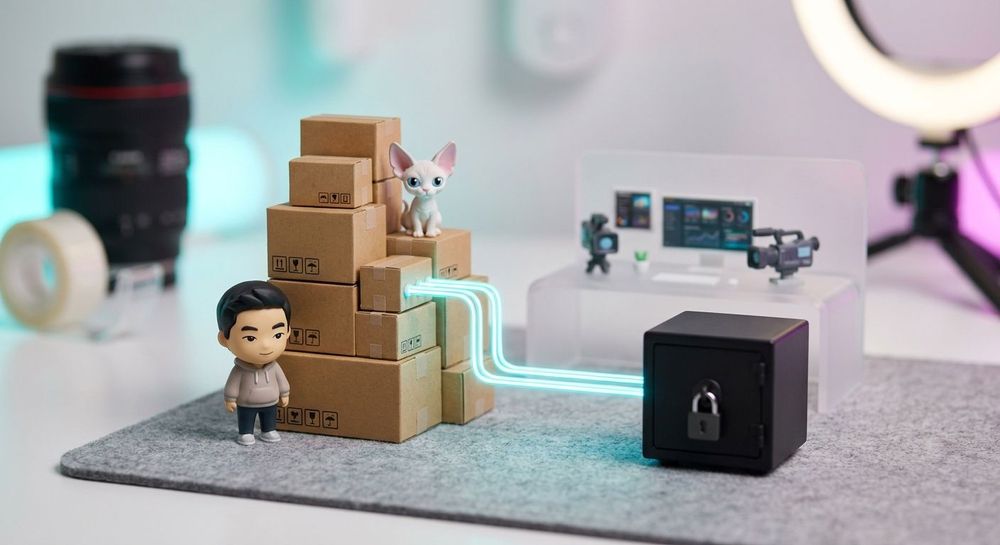
Every DTC brand manager knows the sinking feeling of checking a creator seeding tracker three weeks after shipping inventory, only to find radio silence. The packages are marked as delivered, the follow-up emails sit unopened or ignored, and the marketing calendar has an empty slot where an authentic UGC campaign was supposed to run.
Influencer ghosting is a structural failure of modern creator acquisition. Turnkey UGC marketplaces and legacy databases promise on-demand content with the click of a button, but fail to deliver reliable outcomes. Brands ship valuable product into a void, absorb packaging and fulfillment expenses, and watch unspent platform balances get locked into non-refundable platform credits.
Building an efficient acquisition engine requires understanding why marketplace incentives encourage non-delivery, how platform wallets trap marketing capital, and how direct, intent-driven activation systems secure a 90%+ completion rate on product gifting campaigns.
Research methodology
This analysis synthesizes findings from our September 2026 Benchmark Report, publicly available customer reviews, community discussions across Reddit, G2, and Trustpilot, and creator-activation workflow benchmarks collected in 2026 to evaluate structural gaps in traditional creator discovery. All quantitative estimates and campaign performance projections in this guide represent normalized industry benchmarks based on mid-market DTC e-commerce operations.

The anatomy of creator ghosting — why marketplace incentives encourage non-delivery
The surge in creators not posting after seeding stems directly from the design of turnkey gig platforms. Marketplaces like Billo, JoinBrands, and generic micro-influencer apps operate on low-friction, open-enrollment models. They incentivize high creator sign-up volumes rather than creator commitment or editorial quality.
When a creator signs up for a turnkey marketplace, they treat brand requests like low-stakes gig work. Because the platform sits between you and the creator, there is no personal relationship, no direct professional reputation on the line, and no direct alignment with your product's niche.
Three structural flaws inside turnkey marketplaces directly cause UGC delivery delays and ghosting:
- Volume-Driven Creator Pools: Marketplaces recruit creators en masse to boast large network numbers. The result is a pool of transient gig workers who accept free products across dozens of brands simultaneously without the production capacity to fulfill deadlines.
- Asymmetric Risk: If a creator fails to submit a video on a marketplace, their account might receive a minor internal penalty score, but they keep the physical merchandise without legal or contractual consequence. The brand absorbs the product cost, shipping fees, and lost calendar time.
- Impersonal Transactional Framing: When briefs are distributed via automated gig boards, creators view your product as cheap inventory rather than an authentic collaboration. Without personal communication, the psychological barrier to abandoning the brief is virtually zero.
As one Reddit user noted in r/influencermarketing when discussing marketplace creator drop-off:
"We tested two popular UGC marketplaces with 50 products. More than 40% of the creators missed their 14-day deadline, and the footage we did receive felt completely scripted and forced. When creators realize they already have the item in hand, brand priority drops to zero."
When platforms fail to cultivate professional accountability, brands pay the price in wasted product and missed campaign launches.
The platform wallet trap — why credit refunds hold marketing budgets hostage
Beyond high drop-off rates, turnkey marketplaces impose a hidden tax: the platform wallet trap.
When you launch a campaign on a closed marketplace, you deposit cash into an escrow wallet to cover creator payouts and platform fees. When a creator inevitably ghosts or produces sub-standard content that fails your creative guidelines, the platform does not refund your corporate credit card. Instead, they deposit "platform credits" back into your marketplace balance.
This dynamic creates a closed financial loop where your working capital remains hostage. If you deposit $5,000 for a sprint and 30% of your creators ghost, $1,500 of your working capital is trapped inside software that just proved it cannot reliably fulfill your briefs. You are forced to run more campaigns on an ineffective channel simply to use up stranded funds.
Legacy discovery databases operate under a different, yet equally restrictive credit trap. As the industry moves away from static influencer databases, legacy discovery tools still lock profile discovery behind monthly query credits that burn whether a creator responds or not.
One G2 reviewer evaluating legacy discovery tools noted:
"The search filters are powerful, but the credit system makes you paranoid about exploring profiles. If you open a creator just to see their engagement curve, you've burned an unlock credit."
Whether dealing with locked marketplace payout balances or legacy SaaS profile unlock limits, brands are forced to pay for platform inefficiencies rather than actual, usable marketing assets.

Comparing product seeding models — turnkey gig platforms vs direct activation
To eliminate ghosting and protect working capital, brands aiming to scale UGC creator sourcing are moving away from closed-pool marketplaces and database scrapers in favor of direct activation workflows.
Direct creator activation connects brands directly with active TikTok and Instagram creators who already produce content within their exact commercial niche, maintaining 100% verified direct email communication without marketplace intermediaries.
| Operational Dimension | Turnkey Gig Marketplaces (e.g., JoinBrands, Billo) | Legacy Database Platforms (e.g., Modash, Upfluence) | Direct Intent Activation (Lobby) |
|---|---|---|---|
| Creator Pool Type | Closed network of marketplace gig-workers | Static indexed database (millions of scraped profiles) | Real-time live creator discovery based on niche context |
| Outreach Method | In-app job board bidding | External CSV export to third-party email tools | Verified, direct 1-to-1 brand outreach |
| Ghosting Rate | High (Estimated 30% to 50%) | Variable (Depends on external outreach quality) | Low (Typically under 10% with structured milestones) |
| Refund Mechanics | Locked platform credits; no cash refunds | Strict annual contracts; no refunds on unused credits | Direct brand-to-creator terms; no intermediary escrow fees |
| Profile Burn Costs | Per-task escrow fees | Per-view credit burn on profile exploration | Zero credit burn for profile views; unlimited contextual search |
| Creator Relationship | Anonymous, platform-owned intermediary | Cold, unverified database records | Direct brand relationship; permanent ambassador pipeline |
| Content Quality | Scripted, generic, template-driven | High variance; requires heavy manual vetting | Contextual, audience-aligned, authentic organic style |
Turnkey gig platforms treat creators as commodities, resulting in low creative effort and high dropout rates. Legacy databases provide search depth but leave you stranded when it comes to verified contact data and execution workflows.
Direct activation combines contextual, real-time discovery with owned brand relationships, eliminating platform escrow fees while keeping your marketing budget in liquid cash.
Contract structures and clear brief milestones that guarantee on-time delivery
Direct activation still requires safeguards. To prevent creator ghosting on product seeding campaigns, replace marketplace escrow with simple micro-agreements and structured milestones.
Creators ghost when briefs are confusing, delivery windows are ambiguous, or tracking is non-existent. You can eliminate 80% of delivery delays by implementing a four-stage milestone schedule:
-
Milestone 1: Tracking Delivery Notice (Day 0)
-
Milestone 2: 48-Hour Unboxing and Confirmation Check-in (Day 2)
-
Milestone 3: Concept / Outline Review (Day 7)
-
Milestone 4: Final Draft Submission and Live Post (Day 10 to 14)
Essential micro-agreement clauses for product seeding
A product seeding campaign does not require an intimidating 15-page legal contract. A clean, single-page digital agreement or plain-text terms acknowledgment works best. Ensure your terms include these three non-negotiable clauses:
- Explicit Delivery Window: Define the timeline tied to the package tracking delivery date rather than the shipment date (e.g., "Content draft to be submitted within 7 business days of confirmed carrier delivery").
- Asset Usage and Whitelisting Rights: Secure 12 months of organic reposting and paid ad usage rights upfront. Do not leave usage terms ambiguous, as negotiating ad access after a video goes viral results in 5x higher costs.
- Product Retention Condition: State clearly that the gifted product (valued at MSRP) is provided as consideration for the agreed deliverable. If the creator fails to submit content or communicate within 14 days of delivery, they agree to return the product via a pre-paid label or be invoiced for the product value.
When creators see clear milestones and professional boundaries, they prioritize your brief over open-ended gifting packages.
Follow-up sequences that convert one-off product giftees into long-term brand ambassadors
A product seeding campaign should not end when a video goes live. The real ROI of direct creator activation is turning one-off giftees into ongoing, revenue-generating brand ambassadors.
Turnkey marketplaces prevent this transition because they prohibit brands from contacting creators off-platform, keeping you on a perpetual pay-per-video treadmill. Direct activation gives you direct inbox access to build long-term relationships.
Use these three communication templates across your activation pipeline:
Template 1 — The contextual value offer (first outreach)
Subject: Loving your recent video on [Topic/Niche], [Creator First Name]
Hi [Creator First Name],
I came across your recent TikTok discussing [specific reference to a recent post they made about a problem or category], and your breakdown of [specific detail] was spot on.
We make [Product Name], which helps with [core value proposition/solution]. We would love to send you our [specific product/bundle] to try out, no strings attached.
If you love it, we would be thrilled to collaborate on a quick piece of content for our upcoming launch, but the priority is simply getting the product into your hands.
Where is the best shipping address to send your package this week?
Best,
[Your Name]
[Your Title], [Brand Name]
Template 2 — The delivery touchpoint and creative prompt (day 2 post-delivery)
Subject: Your [Brand Name] package has arrived!
Hi [Creator First Name],
Carrier tracking shows your [Product Name] package was delivered yesterday. I want to make sure everything arrived in perfect condition.
Inside, you will find a quick guide on how we recommend using it for best results.
As you test it out over the next few days, here are two quick creative hooks our community loves: - Hook 1: "The one thing I changed in my [routine/setup] this month..." - Hook 2: "Stop making this mistake when you [action related to niche]..."
Let me know what you think once you have had a chance to open it up!
Best,
[Your Name]
Template 3 — The post-publish ambassador upsell (day 3 post-live)
Subject: Your video is crushing it (+ paid partnership proposal)
Hi [Creator First Name],
The video you posted featuring [Product Name] has received incredible feedback from our team. We love how naturally you integrated the [specific feature or joke].
We want to put some paid ad spend behind your post to amplify your reach and drive direct conversions.
Beyond that, we would love to bring you on as an official monthly ambassador. We offer our core ambassadors: 1. A dedicated 15% discount code and affiliate commission structure. 2. A guaranteed monthly retainer of [$X / month] for [X] videos per month. 3. First access to all new product drops.
Are you open to a quick 10-minute chat this Thursday at 2:00 PM EST to discuss terms?
Best,
[Your Name]
How to run a 100-creator product seeding campaign with 90%+ completion rate
Executing high-volume product seeding without marketplace drop-off requires an organized, step-by-step activation system.
Step 1 — Contextual discovery over generic keyword filtering
Do not rely on static database filters that simply sort by follower count. Find creators who are actively discussing your problem space on TikTok and Instagram right now.
Using Lobby, you can execute real-time contextual discovery across any global city or sub-niche, identifying creators with high engagement and verified purchase intent without burning discovery search credits on dead accounts.
Step 2 — Pitch with verified direct contact data
Avoid generic management inboxes or outdated database exports where emails bounce at a 30% rate. Direct activation relies on verified primary inboxes. Target an initial outreach cohort of 250 qualified creators to secure 100 accepted seeding shipments (a realistic 40% acceptance rate for high-value DTC products).
Step 3 — Address verification and automated shipping integration
Never ship product without explicit confirmation of the creator's current physical address. Connect your e-commerce platform (such as Shopify) directly to your fulfillment queue using a zero-dollar draft order tagged with the creator's handle. This ensures automated carrier tracking is instantly sent to both your marketing dashboard and the creator.
Step 4 — Automated tracking milestones
Set operational triggers based on carrier tracking status:
-
Status: Out for Delivery: Send an automated heads-up message.
-
Status: Delivered + 48 Hours: Trigger Template 2 (Delivery Check-in).
-
Status: Delivered + 7 Days: Prompt for creative concepts or draft submission.
Step 5 — Content review and approval
Review incoming drafts for baseline quality: clean lighting, clear audio, and compliance with FTC disclosure guidelines. Provide concise, constructive feedback within 24 hours to keep creator momentum high.
Step 6 — Scale top performers
Identify the top 10% to 20% of creators whose content generates the highest organic engagement or direct affiliate sales. Transition them immediately into paid whitelisting and monthly retainer contracts using Template 3.
Economic modeling — marketplace vs direct activation campaign
Consider a scenario where an e-commerce brand targets 100 completed UGC videos using a product seeding model with a physical product cost of $30 and shipping of $10 ($40 COGS total).
| Campaign Metric | Turnkey Marketplace Model | Direct Activation Workflow (Lobby) |
|---|---|---|
| Initial Creators Targeted / Ordered | 100 paid tasks placed | 100 creators accepted seeding |
| Ghosting / Non-Delivery Rate (Est.) | 40% (40 creators fail to deliver) | 8% (8 creators fail to deliver) |
| Completed, Usable UGC Videos | 60 videos | 92 videos |
| Platform Escrow / Task Fees | $6,000 ($60/creator platform fee) | $0 intermediary escrow transaction fees |
| Wasted Inventory & Shipping Loss | $1,600 (40 lost units @ $40 COGS) | $320 (8 lost units @ $40 COGS) |
| Locked Platform Wallet Funds | $2,400 trapped in non-refundable credits | $0 locked capital |
| Effective Cost Per Usable Video | $126.66 per video | $43.47 per video |
By eliminating intermediary task fees, avoiding platform wallet traps, and cutting creator ghosting rates through structured milestones, direct activation reduces the effective cost per usable UGC asset by more than 65% while building an owned roster of creator relationships.
Frequently asked questions
Why do creators stop responding after receiving free products?
Creators ghost primarily due to a lack of professional accountability on impersonal gig marketplaces, ambiguous campaign briefs, and zero personal connection with the brand. When products arrive without clear delivery milestones or follow-up communication, creators treat the package as unconditional free merchandise rather than a professional partnership.
What is the best alternative to JoinBrands and Billo for high-quality UGC?
The most effective alternative to closed gig platforms is direct creator activation using a custom-intent discovery engine like Lobby. Instead of paying intermediary escrow fees for scripted marketplace videos, brands use Lobby to find active, relevant creators globally on TikTok and Instagram, contacting them directly for authentic, contract-backed content.
How do direct creator activations prevent platform wallet lock-in?
Turnkey marketplaces require upfront deposits and refund failed campaigns only as locked platform credits. Direct activation eliminates the middleman: brands handle product seeding and creator payouts directly, ensuring marketing budgets stay in liquid company accounts rather than trapped inside third-party software wallets.
Can product seeding scale without paying upfront creator fees?
Yes. High-value DTC products (with perceived retail value over $50) can achieve 40%+ outreach acceptance rates on pure product gifting when the pitch is personalized and contextually relevant. By pairing gifted products with structured milestone contracts and backend affiliate commissions, brands routinely scale seeding campaigns to hundreds of creators per month without upfront production fees.
Tired of static influencer databases?
Lobby replaces dead directories with live TikTok creator search and direct outreach. Zero manual vetting, verified contacts, and live engagement metrics.