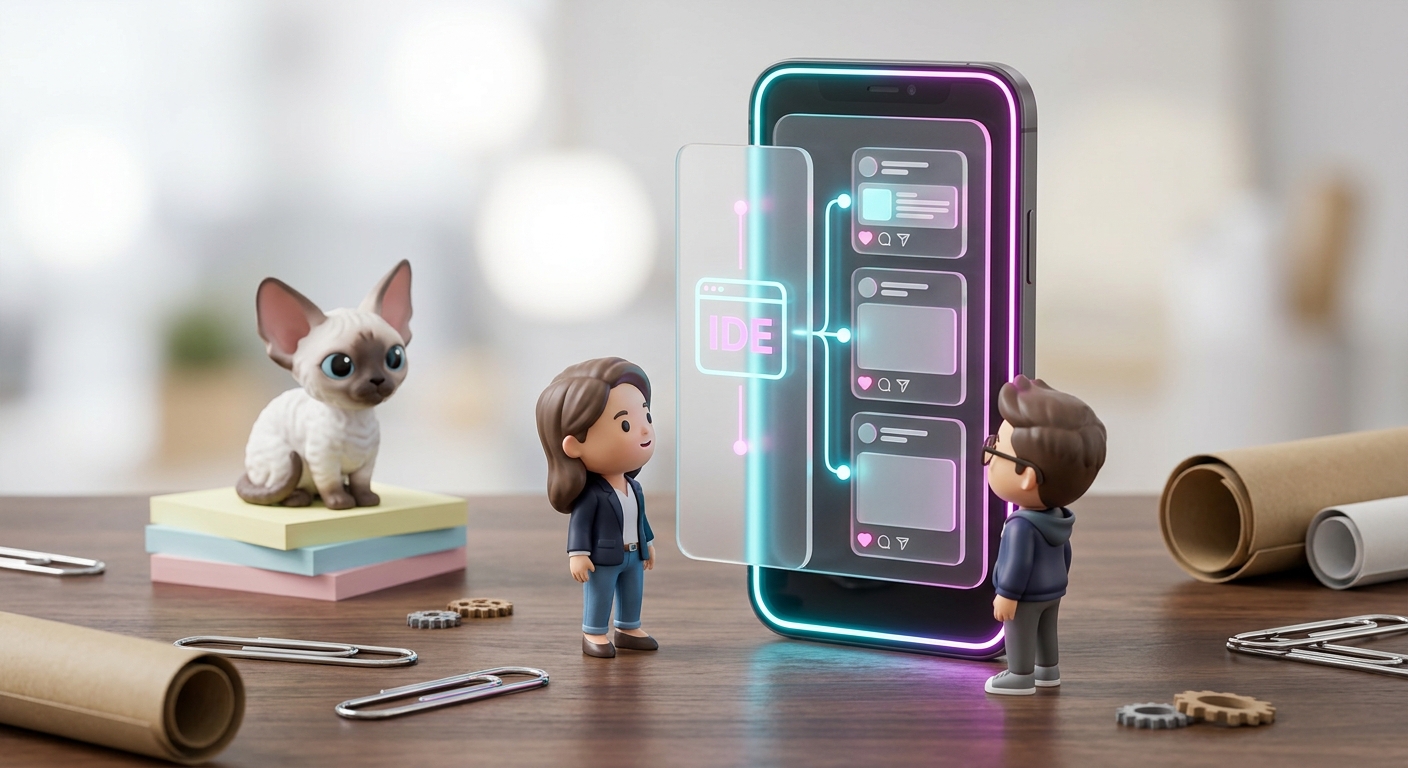
Digital native agencies, high-growth TikTok Shop operators, and modern performance marketers are undergoing a profound architectural transition. They are consolidating their entire operations within unified development and reasoning environments like Claude Desktop and Cursor. By using these environments as a single source of truth, teams can write code, analyze data, and build campaign assets without leaving their primary workspace.
However, creator discovery and influencer sourcing have historically remained isolated. Sourcing has been trapped inside legacy browser-based databases, bloated enterprise SaaS platforms, and brittle spreadsheets.
To bridge this operational chasm, engineering teams are adopting the Model Context Protocol (MCP). By deploying @lobby/mcp-server, growth operators can connect live TikTok creator discovery, 10-video performance validation, and direct creator communication directly to their LLM reasoning loop. This system replaces fragmented manual steps with a clean, protocol-driven architecture.
1. The Legacy Sourcing Bottleneck (SaaS Directories & CSV Hell)
For years, influencer marketing has relied on cached, static databases. Platforms like Modash, Upfluence, and Grin charge agencies steep monthly subscription fees to access pre-scraped profiles. While these tools served early campaigns, they fail in high-velocity TikTok Shop environments.
These legacy platforms present three severe limitations:
- Data Decrystallization and Staleness: Creator profiles in massive databases are updated infrequently, often once every few months. In the fast-moving short-form video landscape, a creator's engagement rate, posting frequency, or target audience can shift in days. Surfacing inactive profiles wastes valuable research time.
- The In-Box Gatekeeper Problem: Traditional databases crawl public web directories to find general agency or management contact emails. When agencies pitch these addresses, they are met with high fee demands and slow reply times, bypassing the direct relationship needed for agile partnerships.
- The Sourcing and Outreach Disconnection: Marketers must search a database, manually select profiles, export a CSV file, scrub the data for formatting errors, and upload the list into separate email sequencing software. This manual chain of events introduces errors, creates duplicate work, and prevents real-time, personalized outreach.
This manual workflow limits speed and scale. As agencies manage more TikTok Shop campaigns, the labor cost of maintaining this static workflow increases.
2. The Fallacy of DIY Web Scraping (Why Browser Automation Fails)
To escape expensive SaaS credit fees, some engineering teams attempt to build custom scraping systems. They use open-source frameworks like OpenClaw or build custom scripts using Playwright, Puppeteer, or Crawl4AI to scrape TikTok and pipe the data into their LLMs.
While a custom scraper seems like a fast solution, it quickly hits practical limits. The hidden costs of DIY headless scrapers are high:
- Anti-Bot Obstacles: TikTok employs advanced anti-scraping defenses, including canvas fingerprinting, TLS JA4 verification, and behavioral analysis. Headless cloud browsers on datacenter IPs get blocked or hit with CAPTCHAs almost instantly. Maintaining a residential proxy network and updating scraper code to bypass these blocks becomes a full-time engineering task.
- Session Invalidation: TikTok requires active, authenticated user sessions for deep content discovery. Custom automated scripts struggle with session rot, which invalidates browser cookies and breaks data pipelines mid-campaign.
- Token Waste: Feeding raw DOM HTML or messy website text into an LLM context window wastes expensive tokens. A single headless browser scrape can consume thousands of tokens on unneeded markup, navigation scripts, and tracking code, increasing API costs while causing hallucinations.
AI agents do not need a fragile browser wrapper to read raw DOM elements. Instead, they require structured, clean, and reliable data provided directly at the protocol level.
3. Enter Model Context Protocol (MCP) & @lobby/mcp-server
The Model Context Protocol (MCP), open-sourced by Anthropic, establishes an open standard for connecting LLMs to external data sources and local tools. Instead of building custom integrations for every tool, developers write an MCP server that exposes tools via a standard JSON-RPC protocol.
The @lobby/mcp-server applies this protocol directly to social commerce. By running the Lobby server, your AI agent gains native capabilities to search, inspect, and qualify TikTok creators directly within its reasoning window.
Lobby's architecture is built on structured on-demand queries rather than static caching:
- Real-Time Platform Sourcing: Lobby does not claim to index or stream entire social video platforms. Instead, it acts as a real-time retrieval layer. When an agent requests creator recommendations for a specific brief, Lobby queries live platform data on-demand to surface active accounts.
- Multi-Video Consistency Validation: To ensure creators are currently active and reliable, the server retrieves and analyzes metrics across their last 10 videos. The agent evaluates view stability, engagement rates, video topics, and visual style consistency to verify the creator's true audience alignment.
- Direct Activation Integration: Once a creator is qualified, the server retrieves verified contact details from the Lobby creator activation engine. Marketers can then draft and execute direct pitches without leaving the command line or IDE.
This protocol-driven approach provides clean, structured JSON data directly to the LLM, eliminating web scrapers, proxy networks, and raw HTML parsing.
4. Technical Integration (Cursor, Claude Desktop, and Projects)
Integrating @lobby/mcp-server into your daily workspace is straightforward and can be completed in minutes. This setup equips Claude Desktop and Cursor with native creator sourcing capabilities.
Configuring Claude Desktop
To add the Lobby server to Claude Desktop, open your local claude_desktop_config.json file. This file is typically located at:
* macOS: ~/Library/Application Support/Claude/claude_desktop_config.json
* Windows: %APPDATA%\Claude\claude_desktop_config.json
* Linux: ~/.config/Claude/claude_desktop_config.json
Add the @lobby/mcp-server configuration to the mcpServers block:
{
  "mcpServers": {
    "lobby-creator-activation": {
      "command": "npx",
      "args": [
        "-y",
        "@lobby/mcp-server"
      ],
      "env": {
        "LOBBY_API_KEY": "your_secure_lobby_api_token_here"
      }
    }
  }
}
Once saved, restart Claude Desktop. You will see a tool icon indicating that Claude now has direct access to live creator sourcing and verification tools.
Configuring Cursor
To use the Lobby server in Cursor, navigate to Cursor Settings > Features > MCP. Click + Add New MCP Server and fill in the configuration details:
- Name:
lobby-creator-activation - Type:
command - Command:
npx -y @lobby/mcp-server
Provide your API key in the environment variables block as LOBBY_API_KEY=your_secure_lobby_api_token_here. For complete setup instructions, see the guide on installing @lobby/mcp-server in Cursor.
Deploying a Multi-Client Claude Projects Framework
For agencies managing campaigns across multiple clients, the multi-client Claude Projects framework offers an elegant way to organize campaigns and prevent data overlap.
By setting up a separate Claude Project or Cursor Workspace for each client, you can organize your workflows systematically:
- Define Brand Instructions: Upload a client-specific brand voice document, product briefs, and target creator personas as project files.
- Isolate Campaign Assets: Keep all pitch drafts, media lists, and follow-up sequences in the project's local directory.
- Scoped Environment Keys: Configure distinct Lobby API keys or project variables to track sourcing costs and campaign metrics per brand.
This structure allows the AI agent to use client-specific guidelines automatically, ensuring that creator searches, qualification metrics, and outreach drafts match each brand's unique identity.
5. Live Sourcing, 10-Video Verification, and 1:1 Activation
Once integrated, your AI agent can manage the entire influencer sourcing and activation lifecycle through a single prompt.
Step 1: Live Sourcing via Natural Language Queries
Instead of navigating complex database filters, you query the agent using plain-English briefs:
"Find ten active TikTok creators based in Austin, Texas, who post about home coffee setups, espresso tutorials, and kitchen design. They must have between 10k and 150k followers and high video view consistency."
The agent calls the Lobby MCP server, which queries live social data on-demand and returns a structured list of matching profiles, complete with descriptions, follower counts, and posting frequency.
Step 2: 10-Video Consistency Verification
To protect campaign budgets, the agent runs a multi-video validation check on each candidate. It analyzes the creator's last 10 videos to confirm:
- View Stability: The creator achieves steady view counts across their recent videos rather than relying on a single viral outlier.
- Topic Alignment: At least 7 out of the last 10 videos focus on the client's target niche, confirming consistent content focus.
- Audience Engagement: Comment-to-view ratios and community interactions show genuine audience intent.
This step weeds out inactive accounts and bot-boosted profiles before outreach begins.
Step 3: Extracting Verified Contacts & Drafting Pitches
Once the creators are qualified, the agent retrieves verified direct emails or contact channels. It uses the client's brand guidelines to draft highly personalized pitch emails:
Loved your counter setup with the walnut dosing cup. We build a magnetic precision scale tailored for wood workflows. Can we ship a unit to Austin + $300 flat for an honest walkthrough video?
Because the agent reads the actual content of the creator's recent videos, it avoids generic, automated-sounding templates that creators typically ignore.
Step 4: Initiating 1:1 Outreach
With verified contact details secured, the agent passes the qualified profiles and custom drafts directly to your communication tool. This setup bypasses manual spreadsheet management and CSV exports, establishing an agile path from discovery to campaign launch. To learn more about this approach, read about why agencies are leaving legacy databases and review the guide on automated direct inbox activation. Detailed API schemas are available in the Lobby Model Context Protocol documentation.
6. Sourcing Workflows: Operational Benchmarks
By moving from legacy browser-based directories to an AI-native, protocol-driven workflow, agencies achieve significant efficiency gains. The table below compares the two approaches:
| Workflow Step | Legacy SaaS & Browser Sourcing (Manual / CSV) | AI-Native MCP Workflow (@lobby/mcp-server) |
|---|---|---|
| Discovery Model | Static, cached database queries with stale profiles. | Live, real-time social graph queries on-demand. |
| Profile Verification | Manual review of social profiles in a web browser. | Automated 10-video consistency and engagement check. |
| Contact Retrieval | Hard-coded general emails or agency gatekeepers. | Verified direct creator contact details. |
| Data Transfer | Manual CSV export, cleaning, and CRM importing. | Seamless, protocol-level data flow within the IDE. |
| Pitch Personalization | Standard templates with basic merge tags. | Context-aware pitches tailored to recent content. |
| Workflow Friction | High friction across multiple disconnected tools. | Zero-friction, unified execution in Cursor/Claude. |
(Note: Illustrative workflow model representing operational benchmarks across digital agency operations.)
Implementing this protocol-driven workflow reduces the time required to source, verify, and pitch a creator from hours to minutes. This speed allows marketing teams to focus on strategy, creative direction, and campaign relationships.
Frequently asked questions
Does the @lobby/mcp-server index or store video files?
No. Lobby is built as a custom-intent search and activation layer. It does not index, cache, or stream entire social video files. Instead, it processes your search query in real time, requests live data from the platforms, and extracts key creator metadata and performance metrics on-demand to maintain high speed and data freshness.
Can I run multiple brand campaigns with a single Lobby MCP integration?
Yes. By using Claude Projects or Cursor Workspace configurations, you can easily set up separate workspaces for each brand. Each project maintains its own instructions, pitch templates, and list of qualified creators, allowing a single LLM client to manage multiple campaigns without data pollution.
How does the server verify a creator's authenticity?
The @lobby/mcp-server retrieves key metrics from the creator's last 10 videos. The agent then analyzes view consistency, comments, and engagement metrics to flag abnormal patterns, such as sudden spikes in views without matching comments, or sudden shifts in content topics. This automated check helps you avoid wasting budget on inactive or bot-boosted accounts.
Why is an MCP-based workflow better than exporting CSV lists?
Exporting CSV lists from a static database introduces data rot, requires manual formatting, and separates discovery from your outreach tools. An MCP-based workflow keeps your data live and integrated. The agent can search, verify, and draft custom pitches in one continuous flow, removing spreadsheets from the process and keeping your campaign data organized.
How do I get started with the Lobby MCP server?
You need an active Lobby account and an API key. Once you have your key, configure the server in Cursor or Claude Desktop using the standard @lobby/mcp-server package. For a step-by-step walkthrough, see our tutorial on installing @lobby/mcp-server in Cursor and refer to the Lobby Model Context Protocol documentation for API details.
Tired of static influencer databases?
Lobby replaces dead directories with live TikTok creator search and direct outreach. Zero manual vetting, verified contacts, and live engagement metrics.