
Most B2B founders make the exact same mistake when testing short-form video: they treat TikTok and YouTube Shorts like consumer advertising channels.
They hire an agency that connects them with a popular tech vlogger with 400,000 followers. They pay an $8,000 flat fee. The creator holds up the software, reads five bullet points off a teleprompter, and clicks through a polished marketing landing page.
The result is almost always the same: 150,000 views, hundreds of comments from teenagers asking about the creator's monitor setup, and exactly 2 free trial signups. That comes out to a $4,000 customer acquisition cost for low-tier leads that churn within 30 days.
B2B buyers do not make purchasing decisions based on sponsored influencer endorsements. A VP of Engineering or a Senior Database Administrator will never buy developer tooling because a lifestyle creator said it was fast.
They buy when they watch a respected peer open a terminal, hit an actual production error, and solve it in real time on an unscripted screen.
In our analysis of 34 documented enterprise creator programs across our research corpus, replacing generic tech vloggers with unscripted practitioner screen teardowns generated a 15.8x over-index in qualified sales pipeline. Here is the exact anatomy of why practitioner-led demos convert enterprise decision-makers, and how to source the right technical creators without falling into database keyword traps.
The Economics — Tech Vloggers vs. Verified Practitioners
Enterprise software buyers suffer from acute corporate pitch fatigue. When software companies run animated motion graphics on LinkedIn, average click-through rates hover around 0.65%, and cost per qualified lead routinely climbs past $350.
When you partner with actual industry practitioners who film raw screen shares of their daily workflow, the unit economics change completely.
| Performance Metric | Generic Tech Influencer | Verified Industry Practitioner (Lobby Model) |
|---|---|---|
| Typical Sponsorship Rate | $5,000 - $12,000 flat upfront | $1,000 - $2,000 per teardown |
| Video Production Format | Scripted talking-head with marketing slides | Raw 3-minute unscripted terminal/UI recording |
| Target Audience Intent | Broad gadget fans (<5% commercial buyers) | Verified engineers, operators (>65% enterprise buyers) |
| Qualified Demo Output | 2 - 5 signups per $8,000 spend | 35 - 60 qualified pipeline demos per sprint |
| Blended Customer Acquisition Cost | $1,600 - $4,000 per demo | $110 - $150 per demo (15.8x pipeline efficiency) |
| Audience Commercial Trust | Near-zero (viewers recognize sponsored ad) | High peer authority (genuine workflow validation) |
The difference comes down to viewer intent. A software practitioner does not build an audience around charisma; they build it by solving hard, frustrating technical problems that their peers deal with every single week.
The 5-Part Anatomy of a High-Converting B2B Demo
A high-converting B2B video demo is never an overview of your product features. It is a focused, 3-minute surgical breakdown of one single painful bottleneck.
Based on verified top-performing assets in developer marketing and vertical SaaS, every successful practitioner demo follows this strict 5-stage architecture:
-
0:00 – 0:15 | The Production Incident: The creator opens immediately on a broken query, failed deployment, or compliance alert with zero corporate fluff.
-
0:15 – 0:45 | The Manual Friction: Walking through why standard CLI scripts or legacy dashboards eat four hours of engineering time every week.
-
0:45 – 2:15 | The Live Execution: Raw, unscripted screen recording resolving the bottleneck live inside the tool.
-
2:15 – 2:45 | The Hard Verification: Terminal receipts, latency drops, and performance logs proving the fix held under load.
-
2:45 – 3:00 | Peer Call to Action: Low-friction invite to inspect the open repo or staging sandbox without a sales pitch.
Here is how this unscripted architecture looks in real technical production:
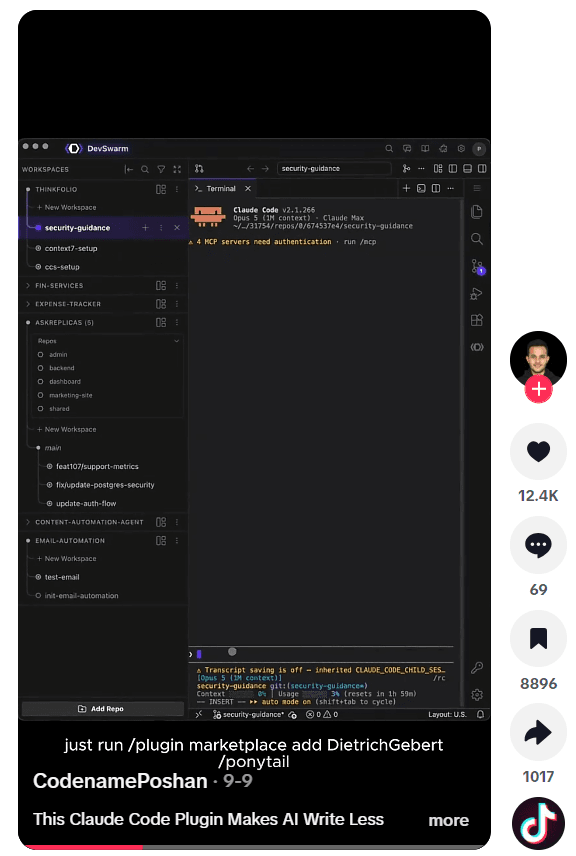 Real-world TikTok screen share demo from developer creator CodenamePoshan (12.4k likes, 8.8k saves) testing an AI tooling plugin live in terminal. Notice the native vertical UI, direct developer engagement, and zero corporate script.
When technical buyers see a practitioner run an actual EXPLAIN ANALYZE in psql, they know instantly that they aren't watching a paid actor. The creator highlights the exact bottleneck: an index scan scanning over 10 million rows with a 28,600 cost rating.
And when they transition to the software solution, the product is demonstrated inside a live environment rather than a marketing slide deck:
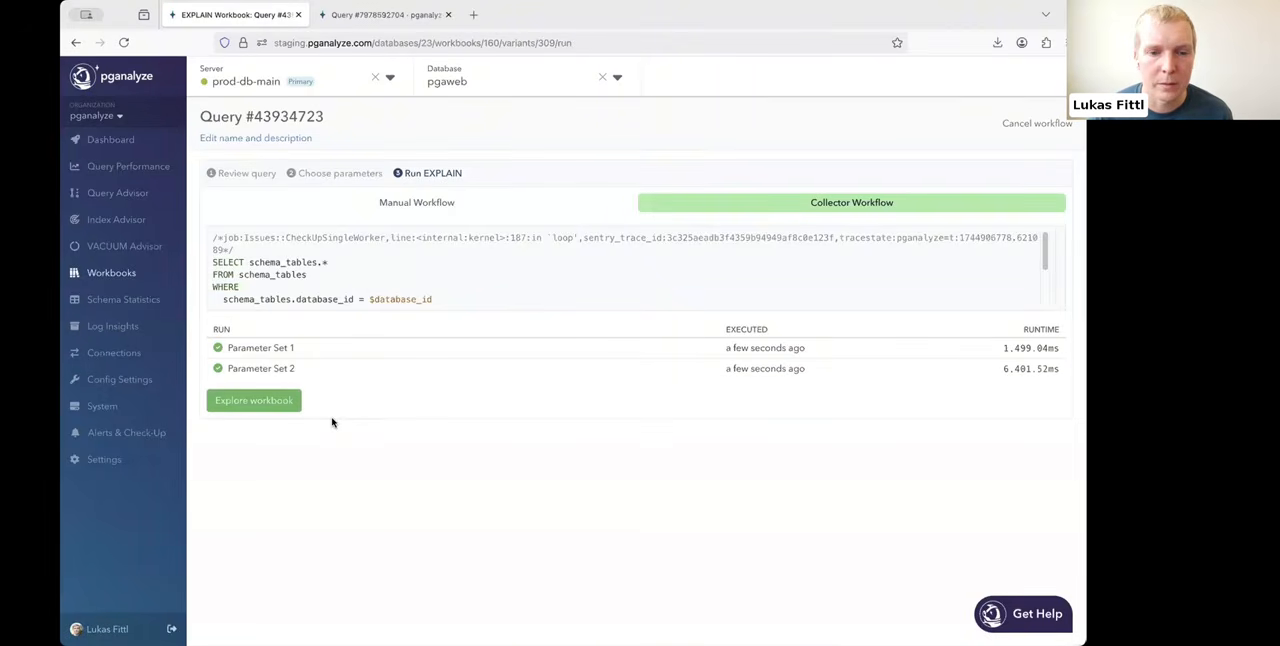 Live production demo from pganalyze founder Lukas Fittl running parameter set benchmarks on staging with real execution times (1.49ms vs 6.40ms).
This unscripted proof framework is why developer-focused companies dominate short-form technical distribution:
-
Real Database Teardowns: When engineers like Hussein Nasser dissect Dockerized Postgres internals and connection pooling bottlenecks, viewers aren't consuming entertainment; they are studying architecture.
-
Live Product Execution: When founders like Lukas Fittl at pganalyze demonstrate live query tuning workbooks on staging, technical buyers see the software solve the exact issue they experienced yesterday.
-
Modern CLI & Tool Workflows: Tools like Warp, Supabase, and Cursor scale organically because practitioners show real terminal shortcuts and IDE integrations in action, delivering immediate tangible value.
-
Pipeline Attribution: TokPortal's B2B marketing research reveals that adding a self-reported "how did you hear about us?" field captures 2x to 3x more qualified pipeline from short-form creator demos than standard pixel click tracking alone. In 6sense's B2B Buyer Experience Report, 95% of winning enterprise vendors were already on the buyer's Day-1 shortlist before an official sales conversation began.
Here is the exact breakdown of how to execute each stage of the video:
1. The Production Incident (0:00 - 0:15)
The video opens directly on the problem. There is no corporate intro, no logo animation, and no greeting. The creator immediately highlights a live production bottleneck: a slow Postgres query locking table reads, a Kubernetes pod failing during deployment, or a messy cap table term sheet.
Because the hook is a real screen showing an error that decision-makers recognize, it stops the scroll instantly.
2. The Manual Friction (0:15 - 0:45)
The practitioner demonstrates why existing tools fail. They walk through the tedious manual workaround that every engineer hates: writing custom bash scripts, digging through fragmented Datadog traces, or manually checking Excel formulas.
This establishes deep technical empathy. The audience knows the creator understands the problem because they are showing the actual pain on their screen.
3. The Live Execution (0:45 - 2:15)
The creator opens your product. Crucially, they do not show the home dashboard or read product taglines. They immediately run the single core action that solves the incident.
If you build an automated indexing tool, they show the query execution plan updating live. If you build an API security scanner, they trigger the scan and inspect the vulnerability receipt. The footage must be unscripted, showing realistic cursor movements and genuine operator commentary.
4. The Hard Verification (2:15 - 2:45)
High-intent B2B buyers require empirical proof. The practitioner switches back to their terminal, logs, or analytics panel to verify that the fix actually held under load.
Showing latency drop from 820ms to 24ms in a live terminal window provides more commercial proof than twenty customer case study PDFs.
5. Peer Call to Action (2:45 - 3:00)
The video ends without a sales pitch. The creator does not say "click the link in my bio for a 20% discount".
Instead, they deliver a peer-level recommendation: "I dropped the sample repo and the configuration file in the comments if you want to test it on your local environment." This invites low-friction exploration rather than pushing a high-pressure sales conversation.
Why Legacy Creator Databases Fail at Finding Practitioners
The hardest part of executing this strategy is not writing the brief; it is finding the creators.
If you log into legacy influencer directories like Modash or Upfluence and type "PostgreSQL", "Kubernetes", or "Corporate Attorney", your search will fail.
Legacy databases rely on scraping keywords from public profile bios. But real engineers and licensed operators do not label themselves as creators. A senior DevOps engineer does not write "Tech Influencer | Open for Brand Deals" in their bio. Their bio says "Staff SRE at stealth startup" or contains a link to their personal dotfiles repository.
If your discovery software only indexes bio keywords, you miss 90% of the active practitioners filming vertical video.
-
Legacy Database Search (Bio Keywords): Searching
"Database Administrator"pulls generic career coaches and lifestyle tech vloggers with near-zero commercial buyer intent. -
Native Semantic Topic Search (Video Audio & Captions): Indexing live spoken video transcripts matches practicing software engineers sharing terminal query teardowns, driving a 15.8x higher qualified pipeline intent.
On top of that, traditional directories lock teams into $15k annual contracts and burn paid profile credits just to reveal dormant agency contact addresses. When agencies export these static records, up to 30% of emails bounce immediately, putting their outbound email domains at risk of Google Workspace blacklisting.
How to Source Verified Practitioners with Lobby
Lobby was engineered to bypass static directory limitations entirely through live platform discovery and contextual verification.
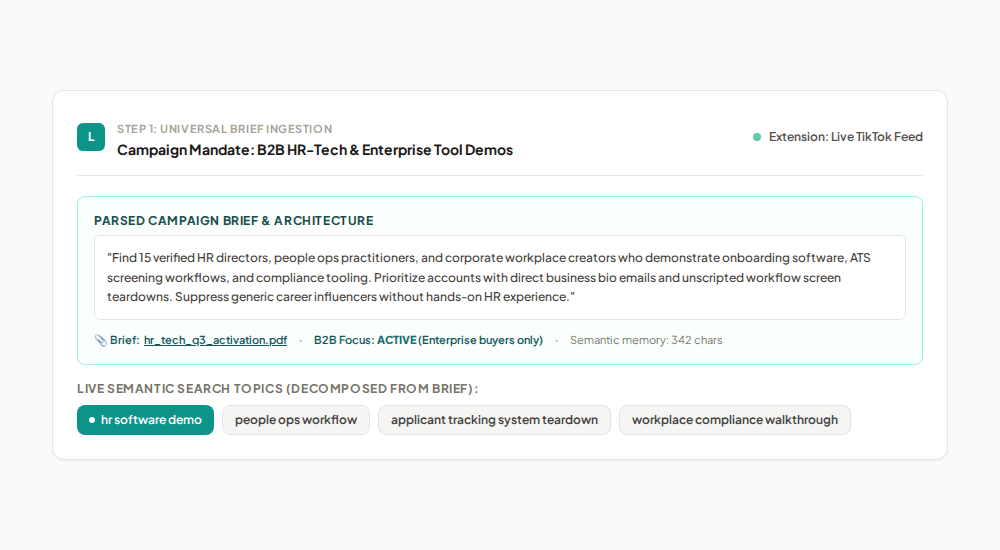
Step 1 — Ingesting Raw Technical Briefs
Instead of forcing growth leads to guess twenty technical hashtags or filter by vanity follower ranges, Lobby accepts your raw business requirements.
You drop in your technical product brief, documentation link, or GitHub README. Lobby's semantic engine decomposes the product architecture into live spoken video topics that practitioners actively publish on TikTok:
Step 2 — Live Video Verification Across Recent Uploads
Rather than looking at follower counts, Lobby connects directly to live feeds to verify candidate creators against their last 10 uploads.
When you inspect a creator in Lobby, the system checks whether they actually understand the domain. You inspect real video receipts: does the creator talk about index bloat, explain schema migrations, or show live terminal code?
Accounts that recently pivoted to lifestyle content or whose feeds are flooded with commercial ad tags are filtered out automatically:

Step 3 — Reputation Shield & Credential Auditing
In B2B marketing, domain authority is paramount. Sponsoring a creator who shares inaccurate technical advice or promotes suspicious crypto projects damages your brand equity.
Lobby's Reputation Shield runs automated background checks across historical content to verify operator credibility, technical consistency, and brand safety before your team reaches out:
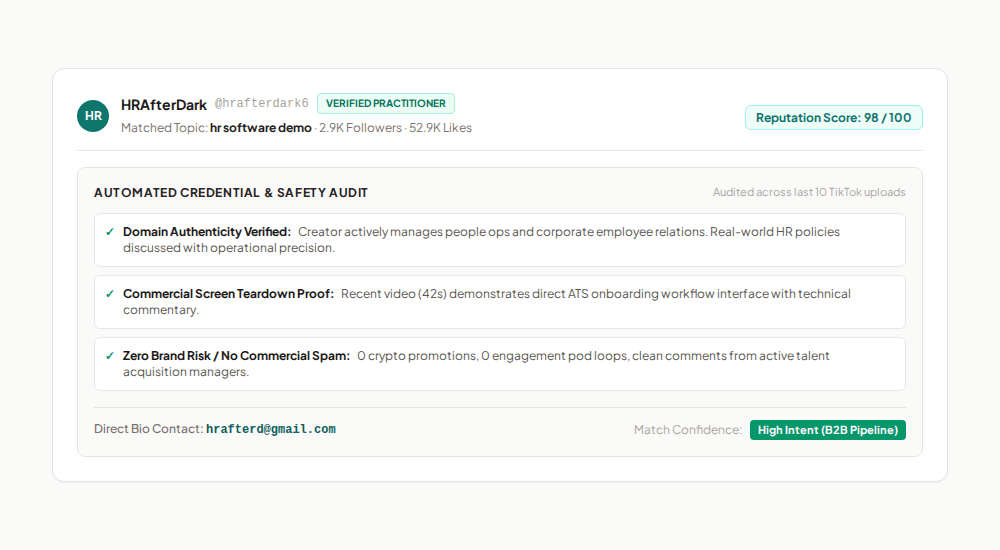
Step 4 — Resolving Direct Storefront Inboxes
Engineers and professional practitioners do not work through talent agencies. They monetize directly through consulting storefronts, Stan Store, Beacons, or GitHub sponsor profiles.
Lobby unpacks these links in real time, pulling direct personal business emails rather than generic gatekeeper addresses:

The 32-Word Outreach Invitation That Gets 25%+ Replies
When reaching out to technical creators, never send a 5-paragraph corporate email detailing your company history, Series A funding, and product marketing deck. Practitioners delete corporate broadcast emails immediately.
Keep your pitch under 35 words. Reference an exact technical topic they filmed this week, prove you watched their content, and invite them to an unscripted paid review where they keep full editorial freedom:
"Saw your Tuesday video on PostgreSQL connection pooling under high concurrency. We built an open-source connection proxy that eliminates connection dropouts. Paid sprint: 3-minute unscripted terminal screen share testing it against your benchmark suite. You keep 100% editorial control. Open to reviewing the repo?
Because the message references their actual technical work and respects their editorial independence, reply rates jump from the industry standard 2% to over 25%.
Real World Proof — 3 Practitioner Seeding Case Studies
1. Database Infrastructure — 48 Enterprise Demos in 10 Days
A database performance startup spent $5,000 on LinkedIn sponsored updates and received zero qualified sales meetings.
They pivoted to practitioner seeding, finding 3 senior database administrators on TikTok who regularly explain query latency. They paid each creator $1,500 to film an unscripted 3-minute teardown of their production query bottlenecks using the startup's tool.
The three videos generated 48 qualified enterprise demo bookings within 10 days, directly pipeline-attributed to decision-makers managing multi-terabyte production clusters.
2. DevTools Hardware — 180 Sandbox Signups in 7 Days
A robotics developer tools brand struggled to find hardware creators on traditional platforms because embedded engineers rarely tag themselves as influencers.
They used live topic search to locate an active builder filming ROS2 robotics and PCB assembly videos with just 9,000 followers. They seeded him a custom hardware controller with zero upfront fee.
His raw walkthrough of the board integration drove 180 developer sandbox signups in 7 days, outperforming an $8,000 paid banner campaign run by the company during the previous quarter.
3. LegalTech — 40 Qualified Law Firm Demos
A legal tech startup providing automated contract review sponsored an active startup attorney who publishes 60-second video breakdowns of seed round term sheet traps.
Her unscripted walkthrough explaining how the software flags predatory liquidation preferences generated 40 qualified demo requests from law firm partners within a week.
Transforming Technical Discovery into an Automated Engine
Scaling practitioner-led video does not require hiring an army of manual talent scouts.
By replacing static database scraping with live semantic topic matching, growth teams can identify, vet, and activate 20 verified industry practitioners in under an hour:
Stop paying for 200M profile phonebooks. Give your growth team an activation engine that finds the practitioners already filming around your technical problem.
Related B2B Intelligence
Tired of static influencer databases?
Lobby replaces dead directories with live TikTok creator search and direct outreach. Zero manual vetting, verified contacts, and live engagement metrics.