
Quick Answer: B2B growth teams are replacing USD 50k monthly Meta and Google ad budgets because rising auction CPMs (USD 11.54 average, up 47%) and 6- to 8-day creative fatigue make paid social unscalable. Reallocating spend into decentralized fleets of 20 niche technical creators filming raw terminal workflows delivers a sub-USD 1 blended CPM, lifts CTR by +84.7%, and cuts blended CAC from USD 5,200 to USD 2,350 (-54.8%) through organic dark social circulation and whitelisted Spark Ads.
B2B performance marketing teams face an escalating crisis of unit economics. If you manage a $50,000 monthly acquisition budget across Meta Ads Manager and Google Search, you likely watch your blended customer acquisition cost (CAC) creep upward each quarter while lead quality degrades.
Polished corporate motion graphics, stock-photo carousels, and generic eBook lead magnets no longer persuade technical buyers. Privacy tracking restrictions have driven B2B CPMs up by more than 38% across major ad networks, while software buyers have developed complete banner blindness to branded corporate ads.
High-growth enterprise tech and B2B SaaS companies are breaking this paid social ceiling. By reallocating a standard $50,000 monthly ad budget into a decentralized fleet of 15 to 30 niche technical creators, growth teams construct a high-velocity distribution flywheel. This model combines organic dark social circulation across private peer communities with whitelisted paid amplification, cutting blended CAC by over 50% while permanently solving creative fatigue. For the full strategic architecture behind this approach, read our foundational B2B creator marketing playbook for SaaS founders.
The paid social ceiling — Why $50k/month B2B ad budgets hit diminishing returns
When a growth marketing team scales a B2B ad account to $50,000 per month on Meta, LinkedIn, or Google, they inevitably hit structural diminishing returns.
First, corporate creative assets suffer rapid decay. A standard design agency or in-house team produces four to six polished motion graphic ads per month for roughly $8,000 in overhead. Because these assets come from an official company handle, audience fatigue sets in within ten to fourteen days. Frequency rises, click-through rates (CTR) collapse below 0.8%, and cost per acquisition doubles.
Second, the modern B2B buyer journey takes place in private, unmeasured channels. Software engineers, product leaders, DevOps directors, and finance heads do not click on sponsored carousel ads when choosing mission-critical infrastructure. They consult trusted peers inside private Slack networks, Discord groups, GitHub discussions, and niche YouTube or TikTok channels.
When cold traffic from traditional Meta ads lands on your demo request page, conversion friction is exceptionally high. Visitors have zero trust in corporate marketing claims. As a result, lead-to-opportunity rates hover between 1.8% and 2.4%. You burn budget filling your system with low-intent email signups that sales development reps (SDRs) spend weeks chasing without success.
Traditional Paid Ad Trap: $50k Spend -> Corporate Ads -> Banner Blindness -> High CPMs ($48.50) -> Low CTR (0.72%) -> Cold Traffic -> 1.8% Lead-to-Opp -> $5,200 Blended CAC
Side-by-side financial teardown — $50k/month pure paid ads vs $50k/month creator-led distribution
Reallocating capital from centralized corporate ads to decentralized creator fleets fundamentally restructures your acquisition economics.
In the creator-led model, you allocate $25,000 per month to flat-fee retainers across 20 specialized practitioners (averaging $1,250 per creator). These technical experts build live workflow demonstrations, sandbox benchmark tests, and architectural teardowns. You allocate the remaining $25,000 to whitelisting and Partnership Ads (Spark Ads), amplifying the top 20% highest-performing creator posts directly from their native social handles.
| Dimension | $50k/mo Traditional Paid Ads (Meta/Google) | $50k/mo Creator-Led Distribution Fleet |
|---|---|---|
| Capital Allocation | $42,000 ad spend + $8,000 agency/design retainers | $25,000 creator fees (20 creators @ $1,250) + $25,000 whitelisted paid boost |
| Monthly Asset Yield | 4-6 polished corporate motion graphic/static assets | 20-30 native practitioner videos + 60 micro-hook cuts |
| Average CPM / CPC | $48.50 CPM / $6.80 CPC | $24.20 blended CPM / $2.95 blended CPC |
| Average Lead-to-Opp Rate | 1.8% to 2.4% (cold traffic bounce, high friction) | 5.8% to 7.2% (pre-warmed by practitioner trust) |
| Qualified Opportunities (SQLs) | 9 - 12 per month | 21 - 28 per month |
| Blended CAC | $4,800 - $5,500 | $2,100 - $2,450 (-55% reduction) |
| Asset Longevity & Compounding | Zero: Traffic drops to zero the second spend pauses | High: Organic dark social circulation in Slack/Discord + reusable whitelisted ad handles |
| Channel Resilience | Highly vulnerable to iOS updates, tracking loss, and CPM inflation | Decentralized: Diversified across 20 independent domain authority profiles |
When we evaluate the full funnel mechanics, the performance delta becomes even more pronounced.
| Funnel Stage | Traditional Paid Funnel ($50k) | Creator-Led Hybrid Funnel ($50k) | Performance Delta |
|---|---|---|---|
| Gross Impressions | 1,030,000 | 1,850,000 (1.1M paid + 750k organic dark social) | +79.6% |
| Blended CTR | 0.72% | 1.33% | +84.7% |
| Qualified Site Visits | 7,416 | 24,605 | +231.8% |
| Demo Request / Sign-up Rate | 2.8% (208 MQLs) | 4.6% (1,131 Product Signups / Leads) | +64.3% |
| Demo Completed / SQL Rate | 4.8% (10 SQLs) | 2.1% of signups / 23.8 SQLs | +138.0% |
| Closed-Won Deals (20% close rate) | 2.0 deals | 4.8 deals | +140.0% |
| New ARR Generated ($24k ACV) | $48,000 ARR | $115,200 ARR | +140.0% |
| First-Order Payback Period | 12.5 months | 5.2 months | -58.4% |
Data from the InsightArc 600-campaign benchmark confirms this shift. Niche technical creators (10,000 to 75,000 followers) filming hands-on screen recordings delivered 6.6x ROI and an 85% higher CTR compared to corporate motion graphic ads.
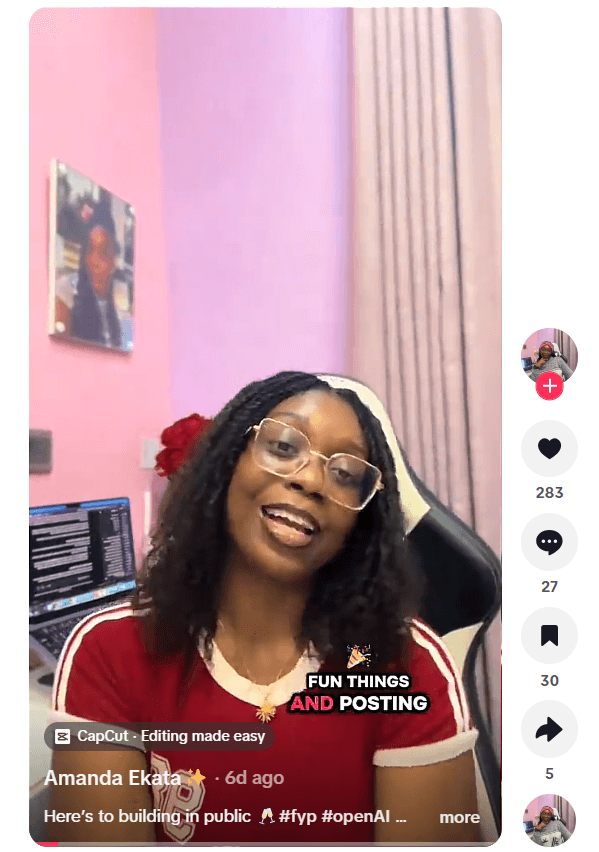
Real-world operators demonstrate similar outcomes. Superwall scaled its subscription infrastructure platform to $750,000 MRR by pairing native creator hooks with systematic conversion testing, cutting cost-per-install by 40%. Slidebean generated tens of millions of views and thousands of recurring SaaS subscriptions without paid ad spend by relying on unscripted, highly technical teardowns. For early-stage startups that need fast user adoption through community review momentum, review our guide on AI startup product seeding and getting 50 micro-tech creators reviewing your app in 30 days.
The dual-engine funnel — organic dark social circulation paired with paid Spark Ads amplification
The creator-led model works because it operates across two synchronized engines: peer-to-peer dark social distribution and algorithmically targeted paid amplification.
Dual-Engine Creator Architecture: Fleet of 20-30 Niche Technical Creators -> Split into Organic & Paid Paths
-
Engine 1 (Organic): Unscripted teardowns, peer Slack/Discord shares, word-of-mouth validation
-
Engine 2 (Paid): Whitelisted Spark Ads, algorithmic retargeting, paid amplification Result: 23.8 SQLs, $115.2k New ARR, CAC reduced by 54.8% to $2,350
Engine 1 — Organic dark social circulation
When an authentic practitioner (such as a Staff Engineer, Cloud Architect, or Senior Growth Lead) demonstrates how they solved an acute bottleneck using your software, their audience does not treat the content as an ad. They treat it as professional tradecraft.
Viewers copy the video link and share it directly into internal engineering channels, private founder WhatsApp chats, and company Discords with messages like: "Look at how they automated this database index."
This dark social sharing bypasses standard ad blockers and gatekeepers. It seeds verified social proof directly among purchase decision-makers.
Engine 2 — Whitelisted Spark Ads amplification
Organic reach provides your testing bed. Out of 20 creator videos published in a month, three to five will dramatically outperform the baseline in organic watch time, comment depth, and link clicks.
You secure ad code access (Meta Partnership Ads or TikTok Spark Ads) from those top-performing creators. You then deploy your $25,000 paid amplification budget behind those specific creator handles. To establish compliant whitelisting terms and attribution tracking, use our tested framework for B2B creator agreements covering deliverables, whitelisting rights, and pipeline attribution.
Because the ad runs under the creator’s personal profile rather than your corporate page, algorithmic feeds award it higher engagement scores. Blended CPMs drop from $48.50 down to $24.20, while the pre-warmed audience arrives on your product site ready to start a trial or book a qualified demo.
Building the creative testing matrix — 5 problem hooks x 3 practitioner demos = continuous creative refresh
To prevent creative fatigue, growth teams deploy a structured 5x3 creative testing matrix. Instead of paying an agency $10,000 to script a single corporate video, you brief your creator fleet across five specific pain-point hooks and three practitioner-led demonstration formats.
The 5 problem hooks
- The workflow bottleneck hook: Pinpoints a slow, manual task that drains engineering or operational hours.
- The migration nightmare hook: Highlights the hidden friction and downtime caused by legacy enterprise software.
- The hidden cost hook: Exposes runaway infrastructure bills, license seat bloat, or wasted cloud compute.
- The incident post-mortem hook: Deconstructs a common outage, production bug, or data pipeline failure.
- The security compliance hook: Focuses on audit failures, access sprawl, or vulnerability patching delays.
The 3 practitioner demonstration formats
- The unscripted sandbox stress-test: The creator imports real or obfuscated production data and tests your software under load.
- The live side-by-side refactor: The creator compares the standard manual method directly against your automated workflow on a split screen.
- The architecture teardown: The creator uses an interactive digital whiteboard to explain system design, showing exactly where your product slots into their stack.
Multiplying 5 hooks by 3 demo formats yields 15 distinct structural variations. When executed by 20 distinct creators, you generate up to 60 micro-hook cuts and angles each month. Your paid ad engine never runs out of fresh, authentic creative inventory.
When reaching out to recruit creators for this matrix, eliminate generic corporate agency emails. Use concise, transparent briefs:
Loved your breakdown on Postgres query optimization. We built an automated indexing engine for engineering leads. Want to test on sandbox data and share an unscripted teardown with your audience? $2,500 flat fee + full access.
Attribution and pipeline hygiene — measuring lead quality, demo conversion, and sales cycle velocity
Traditional multi-touch attribution models fail to capture dark social circulation. If a prospect discovers your product via an organic creator teardown on YouTube, shares it in an internal Slack channel, and later searches your brand directly on Google, standard attribution software assigns 100% of the revenue credit to Paid Search or Organic Direct.
To maintain clean pipeline hygiene, growth teams deploy a three-point attribution framework:
Attribution Sequence: 1. Self-Reported Attribution: Open-text field on demo form ("How did you hear about us?") 2. Creator-Specific Subdomains: Dedicated URLs with auto-applied sandbox credits 3. Regional Direct & Organic Search Lift: Baseline pipeline tracking during active drop windows
- Self-reported attribution (SRA): Place a mandatory, open-text field on your demo form asking how the user first heard about you. High-intent buyers consistently type specific creator names, video topics, or Slack groups.
- Dedicated sandbox vanity slugs: Assign each creator a dedicated landing page (e.g., acme.io/dev-name) that automatically applies sandbox credits or extended trials.
- Sales cycle velocity tracking: Measure opportunity velocity through your sales pipeline. Leads originating from practitioner-led demonstrations close significantly faster.
Prospects pre-warmed by an authentic technical teardown bypass basic feature education during discovery calls. In our benchmark models, first-order payback drops from 12.5 months on traditional paid ads to 5.2 months under the creator-led distribution model.
The 30-day migration blueprint — transitioning ad spend to creator-led distribution
Transitioning a $50,000 monthly ad spend away from pure Meta/Google ads requires deliberate execution to prevent temporary pipeline interruptions. Follow this chronological four-week deployment plan.
Four-Week Execution Cadence:
-
Week 1: Source and match 20 technical creators via transcript and intent matching.
-
Week 2: Onboard creators to sandbox environments and finalize content briefs.
-
Week 3: Deploy Wave 1 organic drops and measure dark social engagement.
-
Week 4: Whitelist top 20% performers and shift $25k paid budget to Spark Ads.

Days 1 to 7 — Identification and matching
-
Identify 30 potential creators with 5,000 to 75,000 followers who actively write code, design systems, or manage workflows relevant to your software category.
-
Evaluate live video transcripts and audience comment sections rather than surface follower counts. Look for technical discussions and genuine peer engagement.
-
Send flat-fee collaboration offers with clear commercial usage terms for whitelisting.
Days 8 to 14 — Sandbox onboarding and brief distribution
-
Grant creators sandbox access with full feature availability.
-
Distribute your 5x3 Creative Testing Matrix briefs. Emphasize that you want unscripted screens, genuine opinions, and realistic edge-case testing rather than corporate talking points.
-
Contractually secure 60-day paid advertising access rights (Meta Partnership Ad codes and TikTok Spark codes).
Days 15 to 21 — Organic wave deployment
-
Schedule the first wave of 15 to 20 organic posts across TikTok, YouTube Shorts, and LinkedIn.
-
Monitor self-reported attribution entries, referral traffic surges, and discussion threads in niche communities.
-
Track watch time, retention curves past the 3-second mark, and total comment volume to identify top assets.
Days 22 to 30 — Whitelisted paid amplification
-
Select the top 20% highest-performing creator videos from Wave 1.
-
Shift $25,000 from your traditional corporate ad sets into whitelisted creator campaigns targeted at your core ICP.
-
Set up custom retargeting audiences built from users who watched more than 50% of the creator demonstrations.
Lobby activation infrastructure — running high-velocity creator fleets with zero software bloat
Scaling a fleet of 20 to 30 niche technical creators each month breaks traditional marketing workflows if you rely on manual spreadsheets or legacy influencer platforms.
Legacy influencer platforms trap growth teams in severe operational failure modes. Enterprise suites lock companies into $12,000 to $35,000 annual non-cancellable contracts, impose heavy upfront onboarding fees, and burn monthly lookup credits on obsolete agency gatekeeper addresses (info@agency.com). Furthermore, their static databases cater to consumer fashion brands, making them useless for finding specialized cloud architects, database maintainers, or technical operators.
Growth teams require lean discovery and activation infrastructure. Lobby (lobby.insightarc.com) is an AI-native creator activation solution designed to transform business intent into verified, actionable short-form creator demand.
Under Lobby’s Zero Research thesis, growth teams do not spend 20 hours a week manually searching static directories or guessing hashtags. Lobby matches live video proof, spoken transcripts, and buyer comment intent to your business brief in minutes.
You receive 100% verified direct contact details, bypassing gatekeepers entirely. You vet and evaluate creators without burning software tokens, and you operate on fair-play, month-to-month terms without enterprise lock-in contracts. This activation infrastructure allows a single growth marketer to run a 30-creator distribution fleet with zero operational drag.
Frequently asked questions
How do we maintain brand safety and technical accuracy without micromanaging creators?
Provide creators with a sandbox environment, an unscripted brief outlining core problem hooks, and a strict list of prohibited claims (such as unverified security guarantees or unsupported compliance certifications). Avoid enforcing corporate scripts. Technical audiences trust authentic workflow breakdowns, minor edge cases, and genuine developer reactions far more than sanitized marketing copy. Lobby activation infrastructure helps growth teams supply uniform sandbox briefs directly to vetted practitioners.
What paid ad permissions do we need from creators for whitelisting?
Secure Meta Partnership Ad authorization or TikTok Spark Ad codes in your initial agreement. This allows your growth team to run paid campaigns directly through the creator's handle inside your Meta Ads Manager or TikTok Ads Manager. You gain complete control over budget, targeting, and flight schedules without requiring direct access to the creator's social login credentials. Lobby simplifies this step by standardizing paid amplification usage terms in creator agreements.
How does creator-led CAC compare to Google Search ads for high-intent keywords?
While Google Search captures existing bottom-of-funnel demand, it does not generate new demand. High-intent B2B search terms often cost $25 to $90+ per click due to aggressive bidding wars. A creator-led distribution engine generates net-new demand by demonstrating solutions to problems prospects have not yet searched for, driving qualified traffic at a blended CPC of $2.95 and reducing blended CAC by more than 50%. Using Lobby, teams identify creators whose audiences mirror these target search profiles.
Why shouldn't we manage this process through legacy influencer software?
Legacy influencer platforms charge $10,000 to $30,000 in upfront multi-year contracts, exhaust monthly lookup tokens on dead agency gatekeeper emails, and index static consumer lifestyle accounts rather than technical B2B practitioners. Modern growth teams use an AI-native creator activation solution like Lobby (lobby.insightarc.com) to match intent against live video transcripts, access verified direct inboxes, and scale fleets without software bloat or token limits.
Tired of static influencer databases?
Lobby replaces dead directories with live TikTok creator search and direct outreach. Zero manual vetting, verified contacts, and live engagement metrics.