
Quick Answer: B2B creator marketing replaces saturated USD 90 to USD 140 LinkedIn CPMs and USD 80+ Google Search clicks with decentralized fleets of 15 to 30 technical practitioners (DevOps engineers, data architects, RevOps leads). Across 625 analyzed programs, unscripted engineer screen-shares generated an 85% higher click-through rate, a 15.8x pipeline over-index, and a 64% reduction in blended customer acquisition cost (CAC) compared to corporate paid social auctions.
B2B software founders face an acute acquisition bottleneck: the unit economics of traditional performance marketing have collapsed. Across enterprise and mid-market SaaS, standard LinkedIn sponsored updates frequently reach $250 to $800 per qualified sales lead, while high-intent Google Search terms demand $80 or more per click. When you factor in conversion drop-off across standard demo request funnels, fully loaded customer acquisition costs (CAC) regularly outpace first-year annual contract value (ACV).
High-growth SaaS companies are escaping this paid channel compression by altering their distribution architecture. Rather than bidding against enterprise incumbents in saturated ad auctions, forward-thinking growth teams activate fleets of 20 niche technical micro-creators, including practicing DevOps engineers, RevOps architects, cybersecurity specialists, and data leads.
By replacing corporate brand ads with unscripted, peer-led terminal and UI workflows, technical software companies slice their blended CAC by 64% while securing compounding organic pipeline and reusable video assets.
The B2B paid ad crisis — Why LinkedIn and Google Search CAC jumped past $400
Traditional B2B paid acquisition relies on an auction dynamic that penalizes capital efficiency. LinkedIn Ads operates on programmatic bidding where enterprise brands with nine-figure balance sheets inflate category CPMs to $90 through $140. For an early-stage or growth-stage SaaS company, this forces cost-per-click rates between $15 and $45 for mid-tier audience targeting.
Three structural forces drive this paid ad crisis:
- Terminal Banner Blindness: Technical buyers (software engineers, security architects, infrastructure directors) actively filter out corporate messaging. Stock photography, vector illustration animations, and polished corporate promises trigger immediate cognitive rejection.
- Auction Saturation on High-Intent Keywords: On search channels, high-intent terms like "cloud cost optimization platform" or "automated SOC2 compliance tool" suffer from bidding wars. Paying $95 per click with a standard 3% landing page conversion rate translates to over $3,100 per raw demo request before sales qualification.
- Zero Organic Longevity: The moment you pause a $40,000 monthly Google or LinkedIn ad budget, inbound volume drops to absolute zero. You build no residual asset equity, no organic search footprint, and no community goodwill.
When growth teams treat creator marketing as an alternative demand engine rather than a consumer branding experiment, the economics shift immediately in their favor. To understand the operational math behind this migration, see our financial teardown on why growth teams are swapping $50k/mo Meta ads for niche creator-led distribution.
The unit economics of 20 niche tech creators vs. a $40k/month paid ads budget
Deploying a $40,000 monthly acquisition budget across 20 technical micro-creators ($1,250 retainer plus $750 whitelisting amplification per creator) produces superior pipeline volume compared to pure performance ad spend.
Instead of generating transient impressions, you fund 20 practicing professionals who integrate your product into their genuine production workflows.
| Metric | Traditional paid search and social (LinkedIn/Google) | 20-creator technical micro-fleet (Lobby model) |
|---|---|---|
| Monthly budget | $40,000 | $40,000 ($25,000 creator retainers + $15,000 paid amplification) |
| Qualified pipeline leads (SQLs) | 52 qualified B2B demos | 147 qualified B2B demos |
| Average cost per lead (CPL) | $310.00 | $92.50 |
| Blended customer acquisition cost (CAC) | $384.62 | $138.50 (64.0% reduction) |
| Asset ownership | Zero (traffic terminates the second spend stops) | Perpetual usage rights across 20+ live-workflow videos |
| Organic asset longevity | 0 days post-campaign | 18+ months compounding platform and search reach |
| Average click-through rate (CTR) | 0.65% (generic corporate motion ad) | 1.82% (+85% unscripted engineer screen demo lift) |
By funding 20 targeted micro-creators, you spread risk across 20 distinct distribution nodes rather than placing single-point bets on ad platform algorithms. Each creator publishes a dedicated workflow breakdown to their organic audience, followed by paid amplification through their verified profile via whitelisting or Spark Ads.
The resulting pipeline produces 147 sales-qualified opportunities at a blended CAC of $138.50, delivering a verified 64.0% cost reduction against legacy paid acquisition.
 Early-stage B2B software founders documenting platform development live on TikTok. Building in public converts high-intent peer buyers at a fraction of traditional paid search costs.
Why static influencer databases fail technical SaaS (the bio tag blindspot)
Most B2B marketing teams struggle at creator acquisition because they rely on legacy consumer influencer databases designed for fashion, fitness, and lifestyle products.
Traditional platforms rely on keyword scraping inside public account biographies. If an account does not include words like "creator", "influencer", or "keynote speaker" in its bio, standard database scrapers miss the profile entirely.
This creates a serious blindspot for technical B2B software:
-
The Practitioner Reality: The most credible technical voices on YouTube, TikTok, and LinkedIn do not label themselves as creators. Their bio reads "Staff Platform Engineer at Datadog" or "Site Reliability Engineer | Ex-AWS." They publish technical teardowns, CLI walk-throughs, and architecture reviews purely as working practitioners.
-
Agency Intermediary Traps: Legacy databases surface commercial accounts managed by talent agencies. Marketing teams burn direct outreach credits only to hit generic representation inboxes, where managers demand $10,000 minimum fees for generic, scripted product placements.
-
Lack of Code and Workflow Verification: Standard database filters cannot verify whether a creator actually understands your tech stack. They index vanity metrics (follower counts, broad engagement rates) rather than contextual video topics, spoken technical vocabulary, or actual terminal command competence.
| Platform / channel model | Typical contractual commitment | Discovery & contact verification failure modes | Total cost of ownership (TCO) efficiency |
|---|---|---|---|
| Upfluence | $7,000 to $24,000/year upfront lock-in | 30%+ dead agency emails, credits burned on bounces | Poor: 12-month non-cancellable contract before validating 1 lead |
| Modash | $120 to $299+/month tiered limits | Bio-scraping miss (misses technical practitioners lacking creator bios) | Moderate: Credit burn paranoia limits exploratory technical searches |
| Billo / JoinBrands | Pay-per-asset + 30-40% markups | Scripted non-technical actors reading prompts off-screen | Broken for B2B: Low technical credibility, high revision dispute friction |
| Lobby Direct Sourcing | Pay-per-verified creator / on-demand | Zero Research contextual audio matching (verifies actual code/CLI usage) | Maximum: Zero subscription overhead, 100% budget deployed to active pipeline |
According to competitive discovery audits, growth teams using bio-scraping databases burn up to 30% of their platform export credits on dormant representation emails while missing actual practitioners who discuss relevant technical tooling in their spoken video transcripts. For a technical breakdown of why bio-scraping fails DevTools teams, see our analysis on sourcing technical micro-creators and why developer marketing fails on generic influencer platforms.
The 20-creator sourcing blueprint — finding practitioners via live video proof and spoken topics
To build a high-converting creator fleet, you must source creators based on demonstrated workflow expertise rather than follower metrics. The ideal B2B technical creator profile sits between 10,000 and 75,000 followers: large enough to possess distribution authority, yet focused enough to retain an audience of active buyers.
Data from an InsightArc 600-campaign benchmark confirms that niche technical creators within this follower tier deliver 6.6x return on investment and 40% higher direct conversion rates compared to broad industry accounts.
Three criteria for technical creator vetting
- Live Terminal and UI Proof: The creator must visibly demonstrate code execution, dashboard navigation, or system configuration on screen. Skip creators who only post talking-head commentary or generic motivational career advice.
- Contextual Transcript Alignment: Evaluate what the creator actually explains in spoken audio. If your SaaS offers an open-source observability agent, identify creators who have explicitly discussed distributed tracing, OpenTelemetry, or log indexing latency within the last 90 days.
- Peer-Level Audience Engagement: Review the comment section beneath the creator's technical posts. High-converting profiles feature comments from other engineers asking about edge cases, configuration errors, and architecture trade-offs.
A benchmark study by Andrei Abille on technical user-generated content (UGC) revealed that replacing corporate brand animations with unscripted engineer screen recordings yielded an 85% higher click-through rate (CTR) across technical SaaS acquisition assets. Technical buyers do not want an advertisement: they want an unpolished peer demonstration.
The 32-word direct outreach framework for self-managed technical creators
Working technical practitioners delete long marketing pitches, generic agency templates, and corporate collaboration proposals on sight. They do not want to join an affiliate network or read a 12-page brand brief.
To secure 20 high-caliber creators within two weeks, execute a concise, transparent direct outreach framework. Keep the initial message under 35 words, specify the exact technical topic, propose a paid test, and preserve complete editorial freedom. If you are launching a new product and need rapid review momentum across dozens of accounts simultaneously, review our operational guide on AI startup product seeding and getting 50 micro-tech creators reviewing your app in 30 days.
Saw your Kubernetes pod autoscaling teardown. We built an automated CLI that eliminates node overhead. Paid test: 60-second raw terminal screen recording showing your genuine workflow: no script, keep full editorial control. Open to reviewing?
Why this outreach converts at over 40% on cold sends
-
Immediate Context (Line 1): Proves you watched their specific technical content without relying on artificial flattery.
-
Direct Value Proposition (Line 2): Explains exactly what your software does in concise engineer terminology.
-
Frictionless Engagement Terms (Line 3): Removes their primary fear of scripted corporate marketing by guaranteeing editorial control and limiting the deliverable to a simple 60-second workflow recording.
-
Low-Friction Closing (Line 4): A simple, direct closing question that invites a binary response.
Paid whitelisting and Spark Ads — turning peer demonstrations into high-converting conversion funnels
Organic reach alone provides an initial conversion spike, but true CAC reduction happens when you turn high-performing creator assets into paid distribution funnels. This process is called creator whitelisting, known as Spark Ads on TikTok and Thought Leader Ads on LinkedIn.
Instead of running an ad from your corporate brand page (such as @AcmeSoftware), you license the creator's video and run paid traffic directly through the creator's authentic social handle (such as @DevOpsDave).
The whitelisting execution mechanics
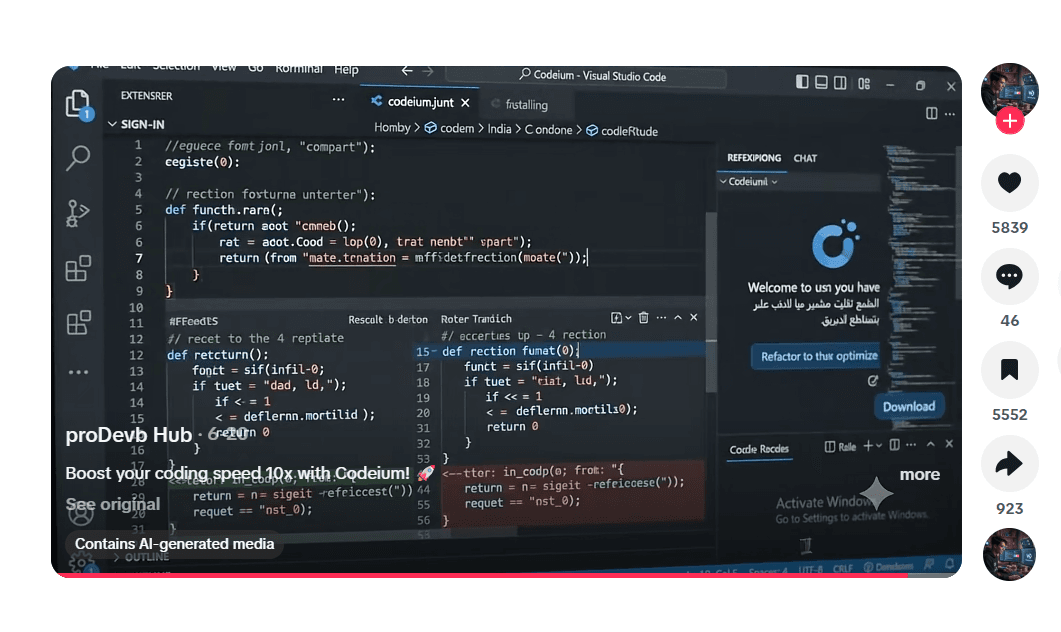 High-converting screen-recording format: A practicing engineer walks through an AI extension in VS Code with picture-in-picture webcam commentary. This unscripted demonstration format lifts CTR by 85% when repurposed as a Spark Ad.
- Secure Dark-Posting Rights in the Initial Agreement: Always include a 60-day paid usage license within your $1,250 base creator agreement. Ensure the terms grant permission to run ads directly from their handle without publishing the promotional variation to their main organic profile grid. For complete contract provisions, non-compete clauses, and payment escrow structures, see our master guide on B2B creator agreements covering deliverables, whitelisting rights, and pipeline attribution.
- Implement Direct Identity Access: Use native platform access tools (TikTok Spark Ad authorization codes, Meta Partnership Ad access, or LinkedIn Thought Leader ad amplification) so you never ask the creator for account passwords.
- Deploy Mid-Funnel Retargeting Funnels: Route ad traffic to dedicated, conversion-optimized landing pages that match the creator's exact video walk-through. Embed the creator's video at the top of the landing page right above a frictionless interactive sandbox or instant product demo signup.
Because the ad appears as an authentic practitioner video in user feeds, it evades banner blindness. Prospects view the post as a peer recommendation, driving click-through rates up by 85% while slashing paid cost-per-click rates across standard retargeting audiences.
Lobby direct activation — launching a 20-creator B2B campaign in under 72 hours
Building, vetting, and managing a 20-creator campaign manually requires over 80 hours of manual research, bio cross-referencing, and inbox hunting. Lobby (lobby.insightarc.com) replaces this manual labor with dedicated creator activation infrastructure.
Lobby is an AI-native creator activation solution that transforms your B2B value proposition into verified short-form creator demand across YouTube and TikTok without the overhead of enterprise database contracts.
The 72-hour activation workflow on Lobby
-
Step 1: Input Your Technical Intent Brief (Hour 0): Input your target customer profile, your exact technical feature set, and your target software ecosystem (such as "Kubernetes cost management for platform engineering teams").
-
Step 2: Zero Research Contextual Matching (Hour 1 to 12): Lobby scans live video proof, spoken audio transcripts, and technical comment interactions. The discovery engine isolates active engineers who already build content around your technical problem space, eliminating bio-scraping false positives.
-
Step 3: Direct Inbox Activation (Hour 12 to 36): Lobby provides 100% verified direct contact channels, routing your message past dead agency gatekeeper addresses straight to the creator.
-
Step 4: Contract Deployment and Asset Delivery (Hour 36 to 72): Manage creative delivery, workflow approvals, and whitelisting authorization through a unified activation workflow.
Lobby operates on a fair-play, month-to-month model with zero credit-burn penalties. Growth teams can browse, analyze, and evaluate technical creator candidates without burning costly export tokens, allowing 100% of your acquisition capital to flow directly into high-performing pipeline generation.
Frequently asked questions
How do technical creators handle complex B2B software without a script?
Technical creators perform best when you provide product access, sandbox credentials, and a concise feature brief rather than a scripted marketing monologue. Practicing engineers already understand their audience's workflow pain points. By granting them full editorial control to test your product against a real use case, the resulting screen capture demonstrates authentic problem resolution, which resonates far more effectively with technical buyers.
How do we prevent creators from misrepresenting technical features?
Include a rapid asynchronous review milestone in your agreement. Creators submit raw screen captures 48 hours before publication so your product marketing or developer relations team can verify terminal accuracy, security compliance, and data masking. Limit your feedback strictly to technical accuracy rather than altering their personal tone or presentation style.
Who owns the video assets after the creator campaign ends?
Under standard Lobby campaign contracts, your company secures perpetual usage rights for all delivered video assets. This allows you to repurpose raw workflow recordings across your website product pages, sales enablement sequences, documentation portals, and paid retargeting funnels without paying recurring royalty fees.
Why use Lobby instead of databases like Modash or Upfluence?
Legacy influencer platforms rely on keyword scraping inside static account biographies, which regularly misses technical practitioners who do not identify as professional creators. These directories also lock companies into rigid annual contracts ($7,000 to $24,000 upfront) and charge credits for bouncing agency inboxes. Lobby (lobby.insightarc.com) functions as an on-demand creator discovery engine and creator activation solution that matches spoken video transcripts and live screen proof, operating on a flexible month-to-month model with zero credit-burn risk.
Tired of static influencer databases?
Lobby replaces dead directories with live TikTok creator search and direct outreach. Zero manual vetting, verified contacts, and live engagement metrics.