
Software engineers and infrastructure architects operate with absolute immunity to traditional corporate marketing. They run ad-blockers, ignore sponsored LinkedIn posts, discard branded whitepapers, and spot manufactured enthusiasm instantly. When an enterprise software company pays a mainstream lifestyle creator to read a script about an observability platform, the developer community does not convert. They mock the campaign on Hacker News and Reddit.
Technical buyers require proof from active practitioners. Authentic developer tool adoption spreads through peer-to-peer technical validation: screen recordings of live terminal sessions, unscripted command-line interface (CLI) walkthroughs, and practical debugging sessions in complex environments.
According to the InsightArc 600-campaign benchmark, niche technical creators with 10,000 to 75,000 followers who demonstrate actual code deliver 6.6x ROI and 40% higher direct trial activations than broad consumer tech influencers. Furthermore, technical micro-creators filming unscripted workflows reduce developer customer acquisition costs (CAC) by 62% compared to standard B2B search and social campaigns, cutting a $410 blended CAC down to $155 per activated developer. This economic shift is documented in detail in our overarching B2B SaaS creator marketing playbook for founders.
Traditional influencer discovery platforms fail in technical categories because they rely on surface-level profile metadata. To build a high-converting developer marketing engine on YouTube and TikTok, DevRel and marketing leaders must abandon generic influencer databases and adopt technical discovery methods.
The developer cynicism barrier — Why engineers reject traditional influencer marketing
Software engineers evaluate products by inspecting the underlying architecture, installation ergonomics, documentation quality, and performance overhead. Unlike consumer audiences who buy aspirational lifestyles, developers seek utility, latency reductions, and cognitive relief.
When a marketing team applies standard influencer tactics to technical tooling, three structural friction points emerge:
- Synthetic scripts destroy technical trust: Developers recognize PR-approved language instantly. Phrases like "seamless all-in-one platform" or "enterprise-grade digital transformation" trigger immediate skepticism. If a creator cannot explain how a tool handles memory allocation or integrates into a CI/CD pipeline, the endorsement falls flat.
- Context collapse across non-practitioner audiences: A tech lifestyle creator with 500,000 followers might generate high view counts, but 99% of their audience consists of casual consumers, students, or non-technical hobbyists. Paying for broad reach yields virtually zero qualified engineering signups.
- The preference for raw screencasts over polished production: Corporate motion graphics signal that a vendor hides product deficiencies behind high production budgets. In contrast, an unedited video of a software engineer resolving a deployment failure in a terminal generates immediate trust. The Andrei Abille Tech UGC case study demonstrated that replacing polished corporate product graphics with unscripted developer screen recordings produced an immediate 85% increase in click-through rates. This performance lift explains why growth teams are swapping $50k/mo Meta ads for niche creator-led distribution across technical categories.
Deploying a decentralized fleet of verified technical micro-creators alters the economic baseline of developer acquisition:
| Metric | Traditional paid acquisition (Google/LinkedIn) | Decentralized technical micro-creator fleet |
|---|---|---|
| Monthly budget allocation | $15,000 / month | $15,000 / month |
| Organic practitioner reach | 45,000 impressions (high ad fatigue) | 380,000 targeted technical impressions |
| Qualified engineering signups | 36 activated developers ($416 CAC) | 97 activated developers ($154 CAC) |
| Blended customer acquisition cost | $416.67 per qualified developer | $154.63 per qualified developer |
| Asset ownership & repurposing | 0 assets (rented placements, ceases when spend stops) | 15 perpetual unscripted screencasts & CLI tutorials |
| Asset shelf-life & longevity | 0 days post-campaign budget exhaustion | 18+ months via YouTube search and GitHub links |
The bio keyword trap — Why generic databases return consumer gadget reviewers instead of engineers
Most DevRel and growth teams start their creator discovery process inside legacy influencer databases like Upfluence, Modash, or Grin. These systems use static profile scraping, indexing words found in user biographies, generic hashtags, and high-level platform categories.
This architecture creates the bio keyword trap. When you search for "developer", "software engineer", or "DevOps" in a generic influencer database, the search engine surfaces:
-
Lifestyle creators filming desk setup tours and productivity vlogs.
-
Career coaches selling entry-level bootcamps or resume templates.
-
Consumer electronics reviewers unboxing mechanical keyboards and monitors.
-
Agency accounts reposting aggregated programming memes without original commentary.
These profiles match the text string "software engineer", but the individuals behind them rarely write production code, deploy cloud infrastructure, or debug distributed systems.
 Live TikTok developer discovery feed (#buildinpublictech). Notice practicing software engineers sharing terminal sessions, hardware setups, and iOS TestFlight builds rather than generic lifestyle content.
Legacy platforms impose severe operational and financial penalties on developer marketing teams:
| Discovery platform | Annual platform software fee | Contact unlock limits & traps | Practitioner verification mechanism | Average acquisition cost per verified engineer |
|---|---|---|---|---|
| Upfluence | $7,000 - $24,000 / yr (mandatory annual lock-in) | Hard caps; ~30% bounce rate on exported contacts | Bio keyword matching (returns consumer gadget reviewers) | $840 per onboarded creator |
| Modash | $1,440 - $3,588 / yr | Aggressive profile unlock credit burn | Bio & hashtag search (lifestyle tech bias) | $520 per onboarded creator |
| Grin | $12,000 - $35,000 / yr | High API drop-off; agency gatekeeper emails | Generic social metrics & consumer audience tags | $1,150 per onboarded creator |
| Lobby Technical Discovery | $0 discovery lock-in (performance aligned) | Zero export limits; direct practitioner verification | Live terminal syntax, IDE telemetry, repo activity | $185 per onboarded creator |
Enterprise database friction data reveals that Modash and Upfluence users report up to 30% bounced contact rates. Teams burn through $7,000 to $24,000 in non-cancellable annual contracts without surfacing active CLI or terminal practitioners. When your team burns contact credits on dead agency inboxes, your creator acquisition motion stalls before sending a single brief.
The technical taxonomy of creator discovery — terminal workflows, code reviews, and spoken syntax
To identify genuine technical micro-creators, you must evaluate their live output rather than their social media bios. True practitioner content contains distinct operational fingerprints across three areas:
1. Terminal workflows and IDE environments
Real engineers film their native development environments. Look for creators who share screens featuring:
-
Custom shell prompts (Zsh, Fish, Starship) with active Git branch status indicators.
-
Tiling window managers, multiplexers (tmux), and modern text editors (Neovim, VS Code, Zed) configured with personal keybindings and extensions.
-
Terminal output displaying compiler warnings, build execution logs, package manager commands, and standard error outputs during live debugging.
2. Spoken syntax and technical vocabulary
Practitioners use precise terminology naturally. A lifestyle creator reads "Kubernetes" from a prompt sheet; a systems engineer speaks casually about ingress controllers, mutating webhooks, memory leaks, garbage collection overhead, or eBPF tracing without looking down at notes. Listen for organic discussions of architectural tradeoffs, edge-case limitations, and configuration pain points.
3. Repository activity and code inspection
Inspect the links accompanying the creator's video. Genuine developer-creators link directly to public GitHub repositories, open-source pull requests, Gists, and technical documentation. Their repositories contain clean directory structures, meaningful commit messages, and runnable setup instructions rather than static landing pages.
Sourcing technical micro-creators across TikTok and YouTube (5K to 50K followers)
The 5,000 to 50,000 follower tier represents the most effective distribution channel for developer tools. Creators in this range retain direct access to their audiences, respond to comments personally, and possess high technical credibility without demanding enterprise sponsorship rates.
Each platform fills a distinct role across the developer discovery and evaluation funnel.
YouTube — Deep architectural walkthroughs and search-indexed tutorials
YouTube acts as an evergreen technical library. Developers use the platform as a visual search engine when resolving configuration errors, evaluating frameworks, or learning new architecture patterns.
-
Content models: 12 to 25 minute unedited implementation tutorials, CLI benchmarks, local setup guides, refactoring teardowns, and deep-dive comparisons of competing technical approaches.
-
Algorithmic longevity: A high-quality technical video on YouTube indexes in Google Search and YouTube Search for 18 to 36 months, generating compounding developer signups long after your campaign ends.
-
Target channels: Creators who focus on niche programming languages (Rust, Go, Zig), cloud-native infrastructure, database internals, and systems engineering.
TikTok — High-velocity technical hooks and syntax edge-cases
TikTok has evolved beyond consumer entertainment into a rapid discovery engine for software engineers. The algorithmic feed serves short-form technical content directly to practitioners based on watch-time signals and spoken audio analysis.
-
Content models: 45 to 90 second videos demonstrating terminal tips, unexpected language behaviors, CLI utilities, debugging discoveries, and relatable engineering scenarios.
-
Algorithmic velocity: A technical TikTok video can reach 50,000 software engineers in 48 hours if the hook addresses a recognized development headache or introduces an efficient command-line tool.
-
Target channels: Junior to Senior engineers sharing daily debugging workflows, CLI efficiency tips, and real-time reactions to open-source releases.
Designing the developer brief — unscripted problem-solving over marketing feature lists
Standard marketing briefs kill technical conversion. If you send an engineer a multi-page PDF filled with mandatory messaging pillars, brand voice guidelines, and scripted feature callouts, they will either reject the sponsorship or produce a wooden video that repels their audience.
Replace the corporate creative brief with an anti-brief centered on actual problem resolution.
The five rules of a technical developer brief —
- Define the problem, not the adjectives: State the exact friction point your tool solves (for example, "debugging distributed tracing across microservices takes three hours of manual log parsing"). Do not mandate buzzwords.
- Mandate raw product usage: Require the creator to install your tool, run it against a realistic codebase or deployment, and show their authentic screen.
- Grant complete editorial freedom: Allow the creator to point out documentation gaps, setup quirks, or missing CLI flags. When a creator says, "The local setup took me ten minutes because the docs lacked a sample config, but once running, the query speed was exceptional," audience trust skyrockets.
- Eliminate corporate slides: Ban slide decks, marketing graphics, and pre-rendered feature animations. Every second of the video must show the IDE, terminal, API response payload, or the creator speaking directly to the camera.
- Keep initial outreach concise: Avoid generic corporate outreach templates. Pitch the technical utility directly.
Saw your Neovim debugging workflow on YouTube. We built a Rust-based eBPF profiler and want unscripted feedback. Paid test repo access, no talking points, full editorial freedom. Open to testing the CLI?
This direct pitch establishes technical respect immediately. It acknowledges the creator's specific workflow, explains the product in concrete engineering terms, guarantees editorial independence, and proposes a low-friction evaluation step.
Compensation, usage rights, and open-source ethics for developer-creators
Engaging practicing engineers as creators requires understanding their professional incentives. Most technical micro-creators work full-time as Senior, Staff, or Principal Engineers. They create content to build personal reputation, explore new technologies, and educate peers, not out of financial desperation.
Compensation benchmarks
Technical creators command higher rates per view than consumer lifestyle influencers because their audience possesses immense enterprise purchasing power:
-
TikTok dedicated video (5K - 50K followers): $400 to $1,500 flat fee per asset.
-
YouTube dedicated deep-dive (5K - 50K subscribers): $1,200 to $4,500 flat fee per asset.
-
YouTube integrated segment (60-90 seconds): $600 to $2,000 flat fee per asset.
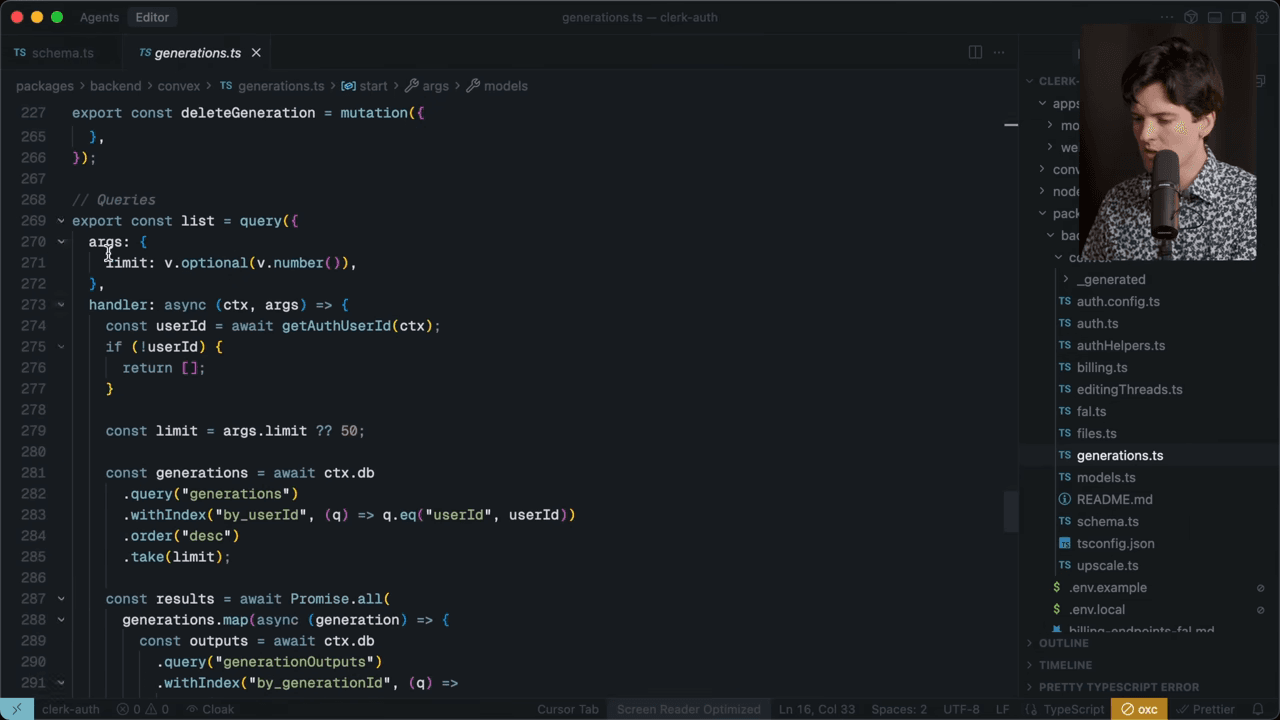 Authentic developer walkthrough: Theo Browne (t3.gg) reviewing Convex backend database code and query structures live in his IDE. Peer-to-peer technical validation consistently outperforms corporate advertising.
Usage rights and paid amplification (Whitelisting)
Securing organic posting rights is only half the battle. Your contract must include digital usage rights allowing your team to repurpose the creator's screen recording across paid developer acquisition channels:
-
Secure 6 to 12 months of paid digital advertising usage rights upfront.
-
Request raw, high-resolution source screen recordings and clean audio stems.
-
Run paid spark ads or whitelisted campaigns directly from the creator's social handle to preserve native authenticity in the feed. To ensure compliance and protect source code assets, follow our legal framework for B2B creator agreements covering deliverables, whitelisting rights, and pipeline attribution.
Open-source commercialization and ethics
If your developer tool builds upon or commercializes an open-source project, tread carefully:
-
Dual-licensing transparency: If your product wraps an open-source core in a proprietary enterprise license, disclose this clearly in the brief. Never ask a creator to claim a commercial SaaS product is purely open-source.
-
Regulatory compliance: Ensure the creator includes clear, explicit sponsorship disclosures (#ad, Paid partnership, or clear verbal acknowledgment) that comply with FTC guidelines. Authentic creators handle this naturally without undermining their technical authority.
Lobby technical discovery — matching developer tool briefs to live practitioner content
Manually scouring YouTube comments, monitoring GitHub trends, and testing hashtags across TikTok consumes 20 to 30 hours each week. Most developer marketing teams lack the operational bandwidth to manage manual sourcing while simultaneously maintaining documentation, supporting community forums, and organizing technical launch events.
Lobby eliminates this friction as an AI-native creator activation solution. Instead of relying on outdated bio keywords or dead database directories, Lobby matches your developer tool brief directly to live video proof, spoken transcripts, and practitioner comment intent.
By analyzing what creators actually say, show on screen, and build in public, Lobby surfaces active engineers who code in your target languages and build with your underlying stack.
-
Zero research thesis: You never waste hours manually searching static directories or parsing irrelevant profiles. Lobby transforms your product requirements into verified, activated technical creators across TikTok and YouTube in minutes.
-
100% verified direct inboxes: Bypass dead agency gatekeeper addresses. Lobby provides verified direct contact details for practicing engineers, driving industry-leading outreach reply rates.
-
Zero credit burn: Evaluate, vet, and analyze technical creator profiles without burning software tokens or watching artificial export limits expire.
-
Fair-play operational flexibility: Lobby operates on clear month-to-month plans without mandatory multi-thousand dollar onboarding fees or restrictive 12-month lock-in contracts.
Developer tools win when real engineers show other engineers how to build faster, fix bugs, and optimize infrastructure. By sourcing genuine technical micro-creators through live workflow verification, your DevRel and growth teams replace ignored corporate marketing with peer-driven adoption at scale.
Visit lobby.insightarc.com to activate your technical creator fleet today.
Frequently asked questions
Why does influencer marketing fail for developer tools on traditional platforms?
Traditional influencer platforms like Upfluence, Modash, and Grin index static bio keywords and high-level social metrics. When searching for technical profiles, these systems return consumer tech reviewers, desk-setup vloggers, and lifestyle accounts rather than practicing software engineers. Software developers reject scripted promotions from non-practitioners, leading to wasted ad spend and low conversion rates. Authentic adoption requires peer-to-peer technical validation through unscripted CLI walkthroughs, IDE demonstrations, and terminal workflows.
How do you verify if a micro-creator is a genuine software engineer?
To verify technical authenticity, examine the creator's live video output rather than their written bio. Look for native terminal environments (custom shells, tmux), advanced IDE setups (Neovim, VS Code), and natural handling of compiler errors or debugging stack traces. Genuine technical creators speak fluent industry syntax without reading scripts, explain architectural tradeoffs, and provide public GitHub repositories or documentation links for their code.
How much should DevRel teams pay technical micro-creators?
Technical micro-creators (5,000 to 50,000 followers) generally command rates between $400 and $1,500 for a dedicated short-form video on TikTok, and between $1,200 and $4,500 for a dedicated deep-dive tutorial on YouTube. These rates reflect the creator's specialized professional expertise as a practicing engineer and the high purchasing power of their technical audience.
How does Lobby source technical creators differently than legacy databases?
Lobby (lobby.insightarc.com) is an AI-native creator activation solution that matches your business brief to live video proof, spoken transcripts, and technical comment intent across YouTube and TikTok. Instead of charging annual database seat fees or burning profile unlock credits on static bios, Lobby verifies actual IDE and terminal screen activity, surfacing direct practitioner contacts with flexible month-to-month terms.
Tired of static influencer databases?
Lobby replaces dead directories with live TikTok creator search and direct outreach. Zero manual vetting, verified contacts, and live engagement metrics.